 reckoner
Guide Glutes
Building your glutes: what the research says
Hip thrusts and squats grow your glutes by about the same amount. Pick the ones you enjoy, take your squats deep, and keep adding weight over time.
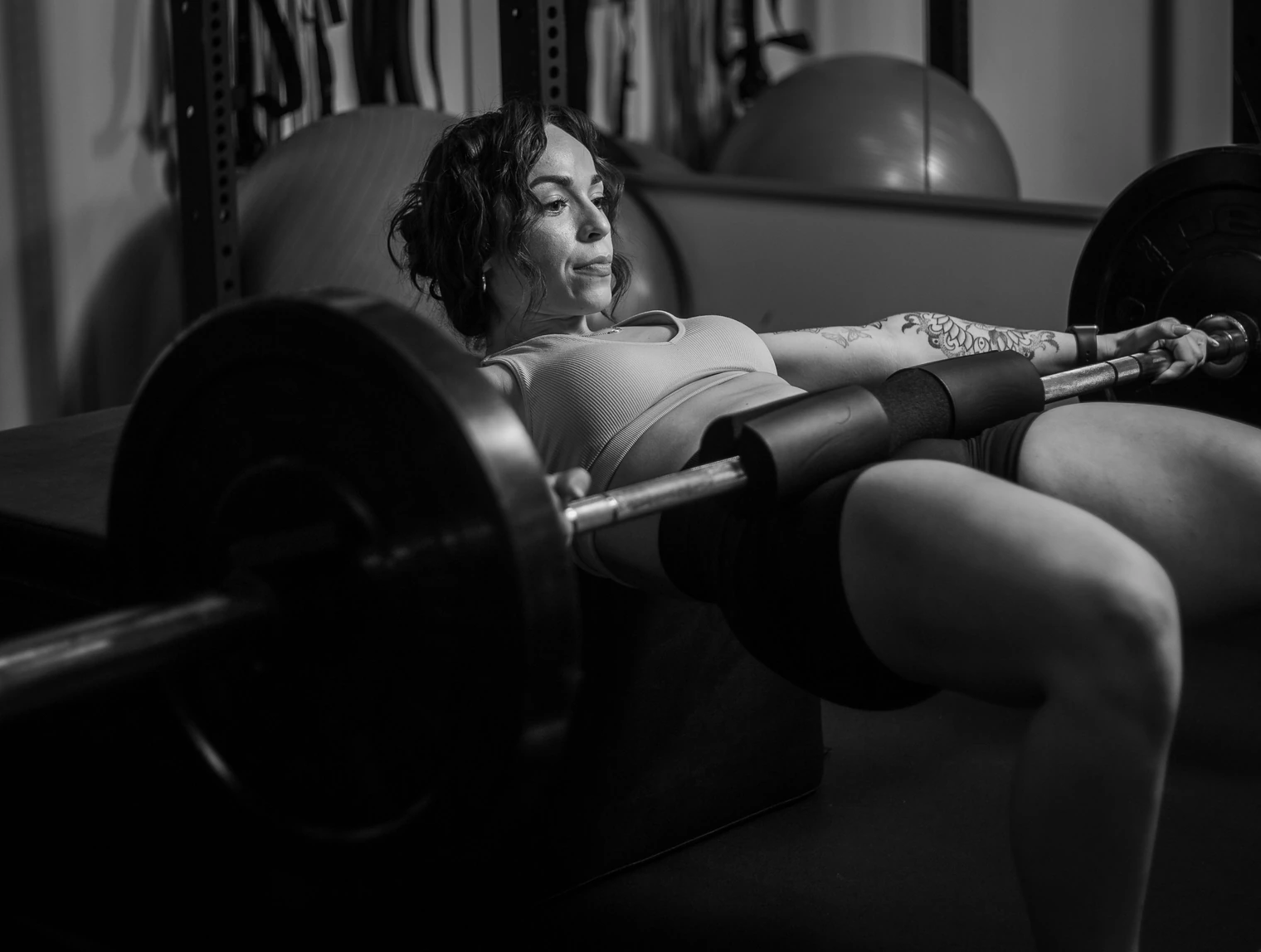
Open any fitness app and the glute advice arrives fast. The hip thrust is the queen of glute exercises because you can feel it working. Squats are a thigh exercise and will make your legs big before they do anything for your bum. Do kickbacks every day, with a band, until it burns.
Some of that is half right and most of it is guessing. The good news is that the research says something simpler and kinder than the feed does: several exercises work, the best one is the one you keep doing, and what matters most is that it gets heavier over time.
You build muscle the way anybody does
First, the thing nobody tells women clearly enough. A 2020 review compared men and women following the same training programs and found no difference in how much muscle they built, relative to where they started. Women actually gained more upper body strength, relative to their starting point1.
So you do not need a special women's glute program. You need a good program, run consistently.
Hip thrust or squat
The best test of this question so far is a 2023 trial. Beginners trained for nine weeks with either the hip thrust or the back squat, with the number of sets matched, and their glutes were measured with MRI before and after2.
Both groups grew their glutes by similar amounts. The squat group also grew their thighs more, and each group got stronger at the lift it practiced2.
The part worth remembering is this. In the first session, the hip thrust lit the glutes up more than the squat did on the muscle sensors. That did not predict who grew more2. The feeling of a muscle working hard is real, and it is not the same thing as the muscle growing.
A muscle that burns is not always the muscle that grows.
Depth matters in a squat
If you squat, how low you go makes a difference. In a ten week trial, people doing full squats grew their glutes by about 6.7 percent, against about 2.2 percent for people doing half squats3.
That study was small and the lifters were men, so read it as a strong nudge rather than a law. If your hips and knees are comfortable at the bottom, take your squats deep. If they are not yet, a lower box to squat to, or a goblet squat, is a good way to work toward it.
A simple way to build them into your week
None of this needs a glute day. Spread these across the days you already lift:
- One squat or lunge. A back squat, a goblet squat or a rear foot elevated split squat, taken as deep as is comfortable.
- One hip thrust or bridge. The barbell hip thrust if you have a bench and a bar, a glute bridge on the floor if you do not.
- One hinge. A Romanian deadlift works your glutes and hamstrings together.
- Something for the side of your hip, if you like it. The side of the glute is a different job, and loop hip abduction covers who needs it and why.
- Make it heavier over time. Add reps, then weight. Progressive overload is the whole engine of growth, for glutes as for everything else.
If you train three days a week, that might mean a squat on one day, a hip thrust on another and a Romanian deadlift on the third, each getting a little heavier through the block. If you train two, pair them up. The exact arrangement matters far less than doing them every week, for months.
How many sets you need each week is its own question, and how many sets per muscle each week answers it.
Three mistakes that slow glute progress
- Chasing the burn instead of the weight. Twenty minutes of band kickbacks feels like a lot of glute work. But the trial above found that how much a muscle lit up did not predict how much it grew2. A hip thrust or a squat you can keep loading heavier is the better bet, and the band work is a fine extra on top.
- Arching instead of extending. On a hip thrust or a bridge, the top of the rep is your hips straight, ribs down and chin tucked, with the effort coming from your glutes. If you finish by leaning back through your lower back instead, the bar goes higher and your glutes do less of the lift. Stop where your hips are straight.
- Changing exercises every week. A new glute routine every Monday feels fresh and makes it almost impossible to tell whether you are getting stronger. Keep the same few movements for a whole block, and let the weights on them tell you whether it is working.
What Reckoner does with your glutes
Glutes get a bar of their own in the weekly volume Reckoner counts, beside your quads and hamstrings rather than folded into them. In Reckoner's library, the back squat and the Romanian deadlift both list your glutes among the muscles they train first, alongside the hip thrust. So your squat counts as glute work, because it is glute work.
And because the engine adds weight when you have earned it, the thing that matters most here, getting heavier over time, is the part you do not have to plan.
Squat deep, thrust or bridge, hinge, and keep adding weight. Your glutes will take it from there.