 reckoner
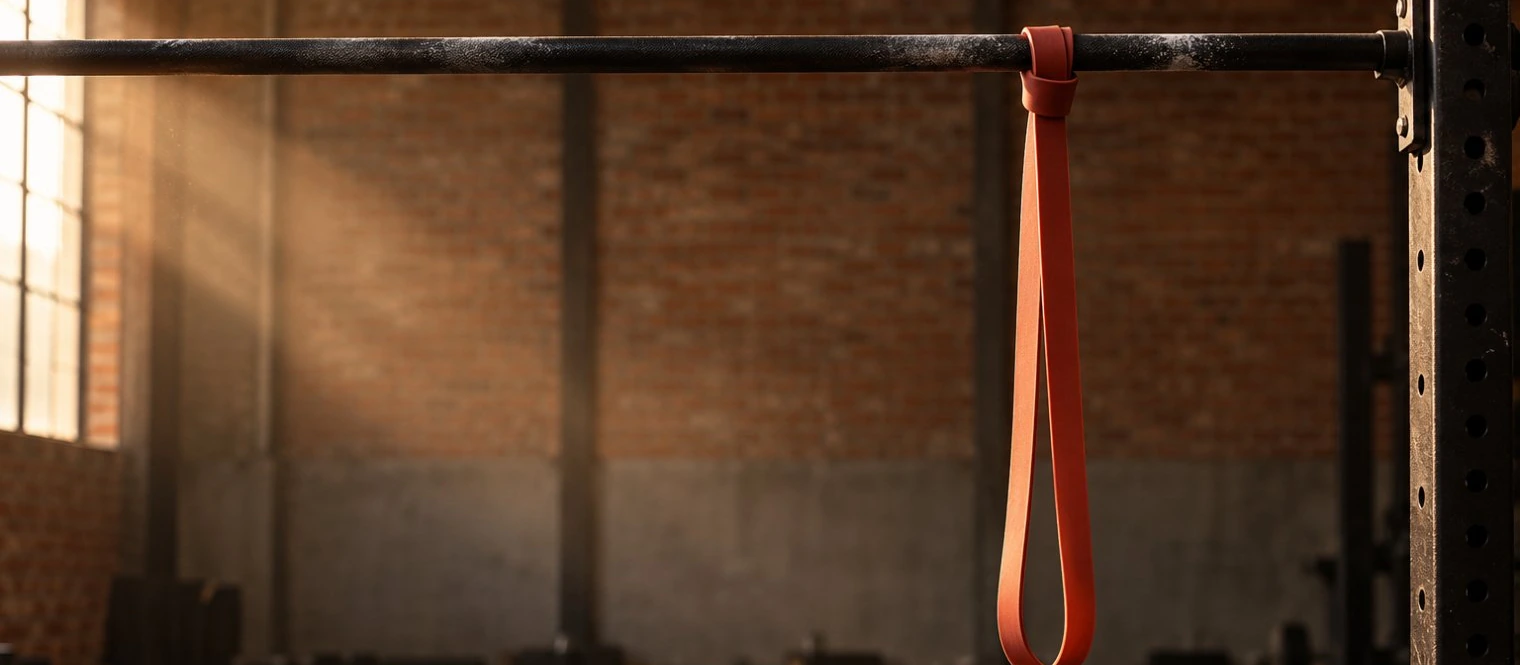
If you can't do a pull-up yet, or you can do one on a good day, a band is one way to get there. It takes some of your weight, so you can practice the whole movement now, with good form, while you get stronger.
You can train from this page tonight. All you need is a bar and the bands you have.
Why a band has no number
A band pulls harder the further it stretches1. So the help you get changes through every rep: the most at the bottom, the least near the bar. Colors aren't a standard either. Two makers can put the same two colors in the opposite order23. And when one maker's bands were measured, its published figures came out too high2.
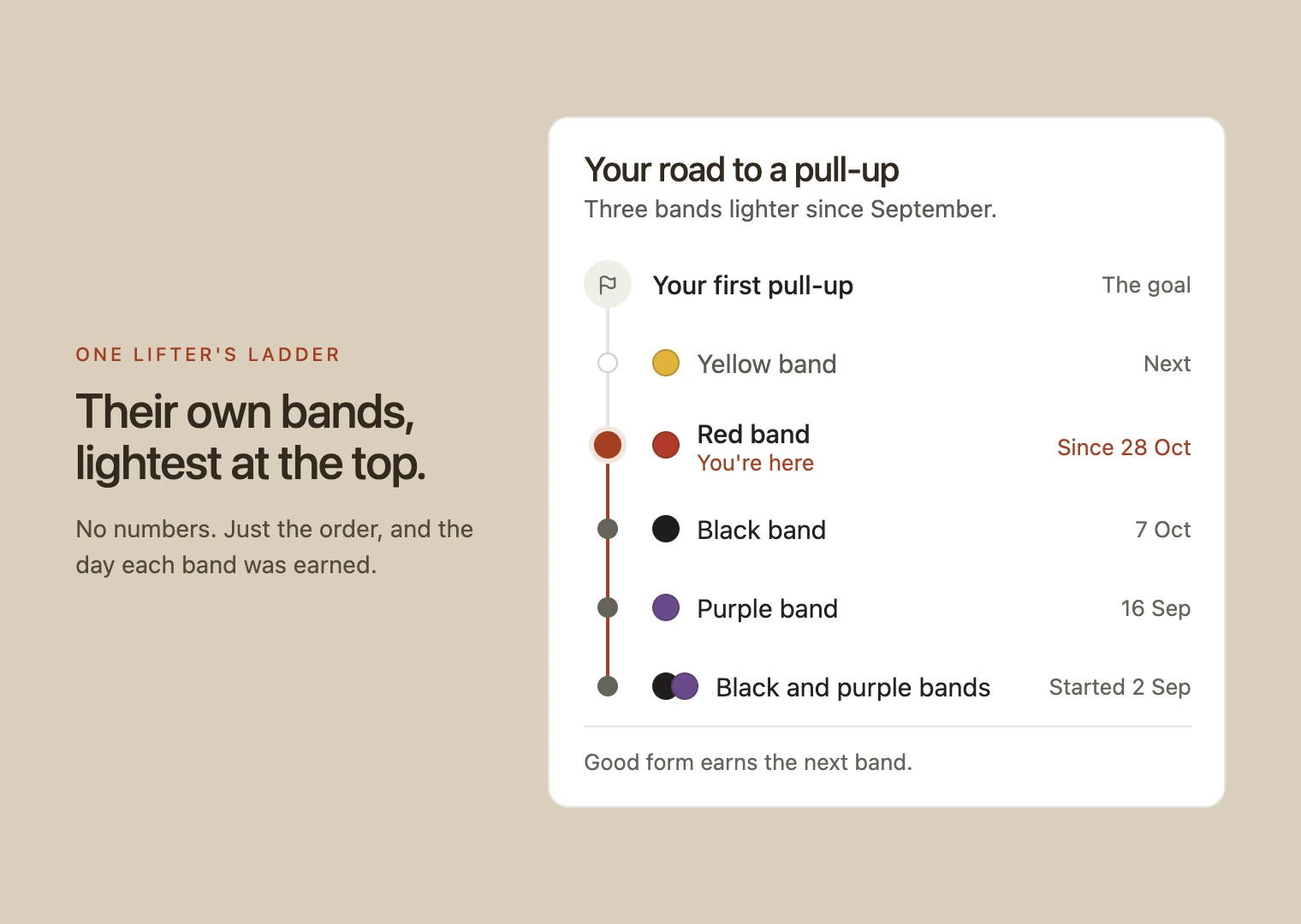
So let the number go. Line up the bands you own from lightest to heaviest. That order is yours, and it's the only ladder you can trust.
Your own bands, lightest to heaviest, are the only honest ladder.
Set it up so it can't slip
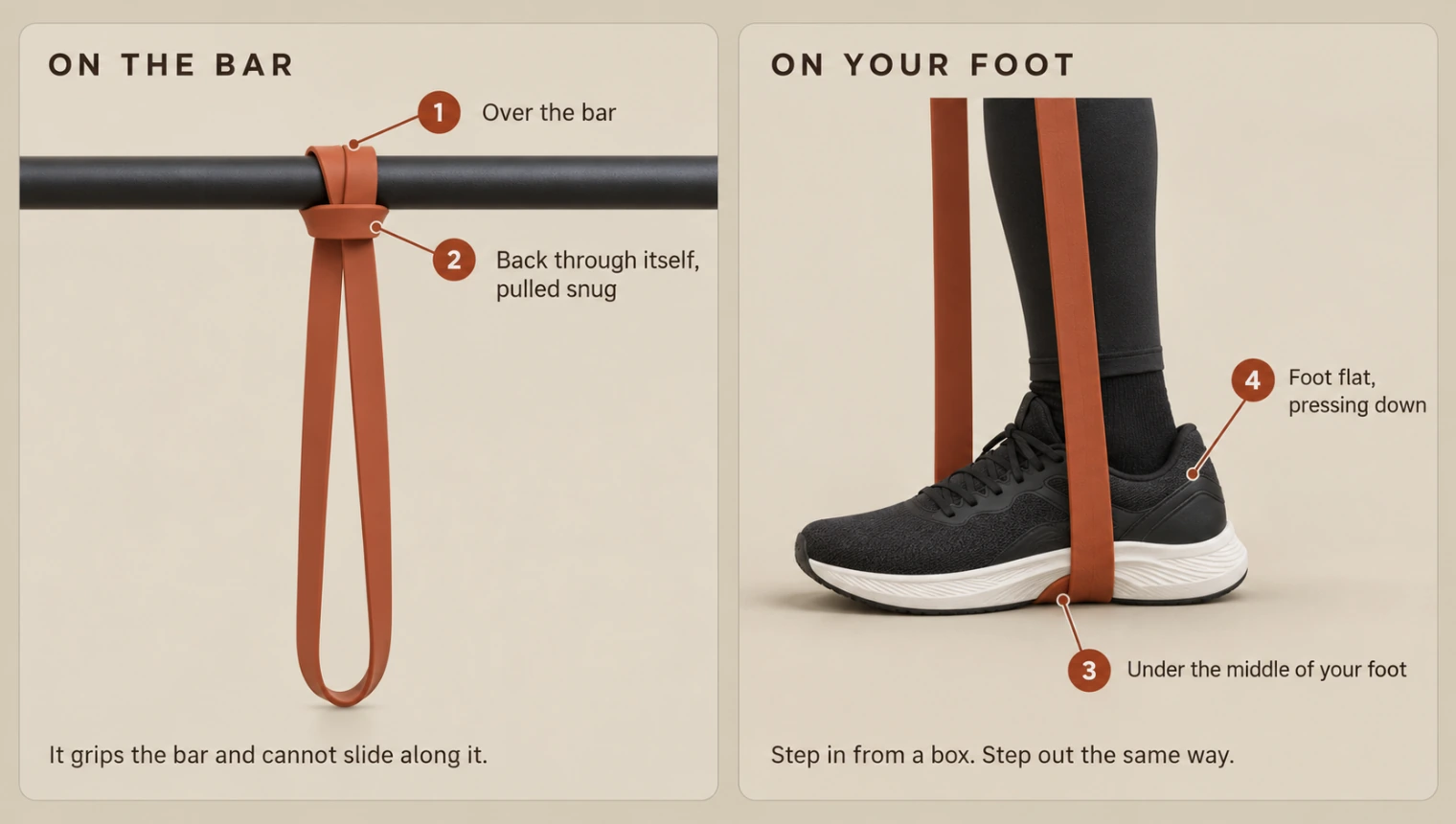
Loop it over the bar. Pass the band over the bar, feed one end through the other, and pull it snug. It should grip the bar, not slide along it.
Step in from a box. Hold the bar, pull the loop down, and set it under the middle of one foot. Keep that foot flat and pressing down so the band can't roll off.
Step out the same way. At the end of a set, put your free foot back on the box before you take the other out of the loop.
Look before you use it. Check each band for nicks or thin spots before every session. A worn band is done4.
The pull-up, the same way every time
Every rep starts from a dead hang: arms straight, shoulders set down and back, away from your ears. Pull until your chin clears the bar. Then lower slowly, all the way back to straight arms.
The band helps you up. It never changes what a rep is. A full rep on a heavier band teaches you more than half a rep on a lighter one5.
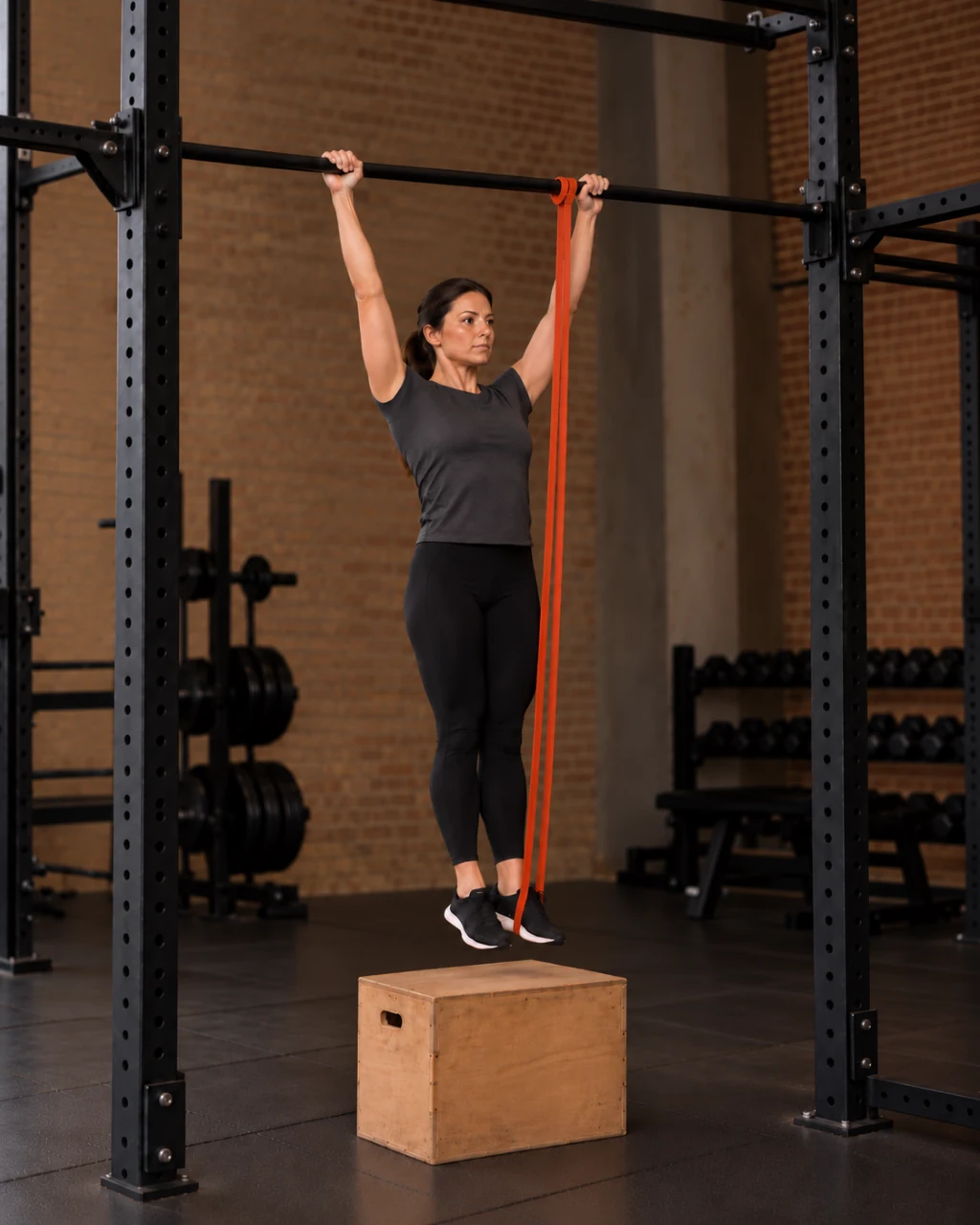 1 Start | 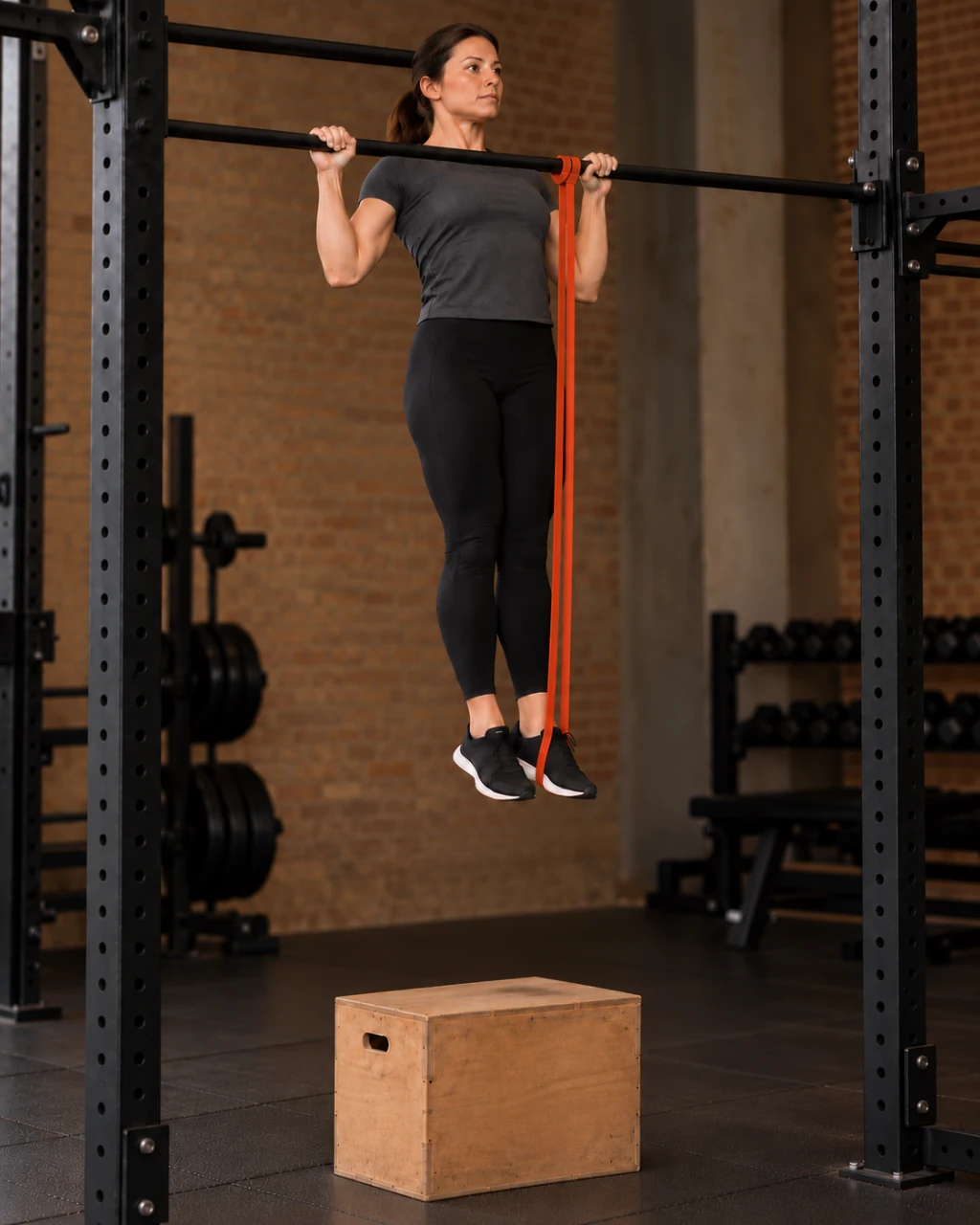 2 Top | 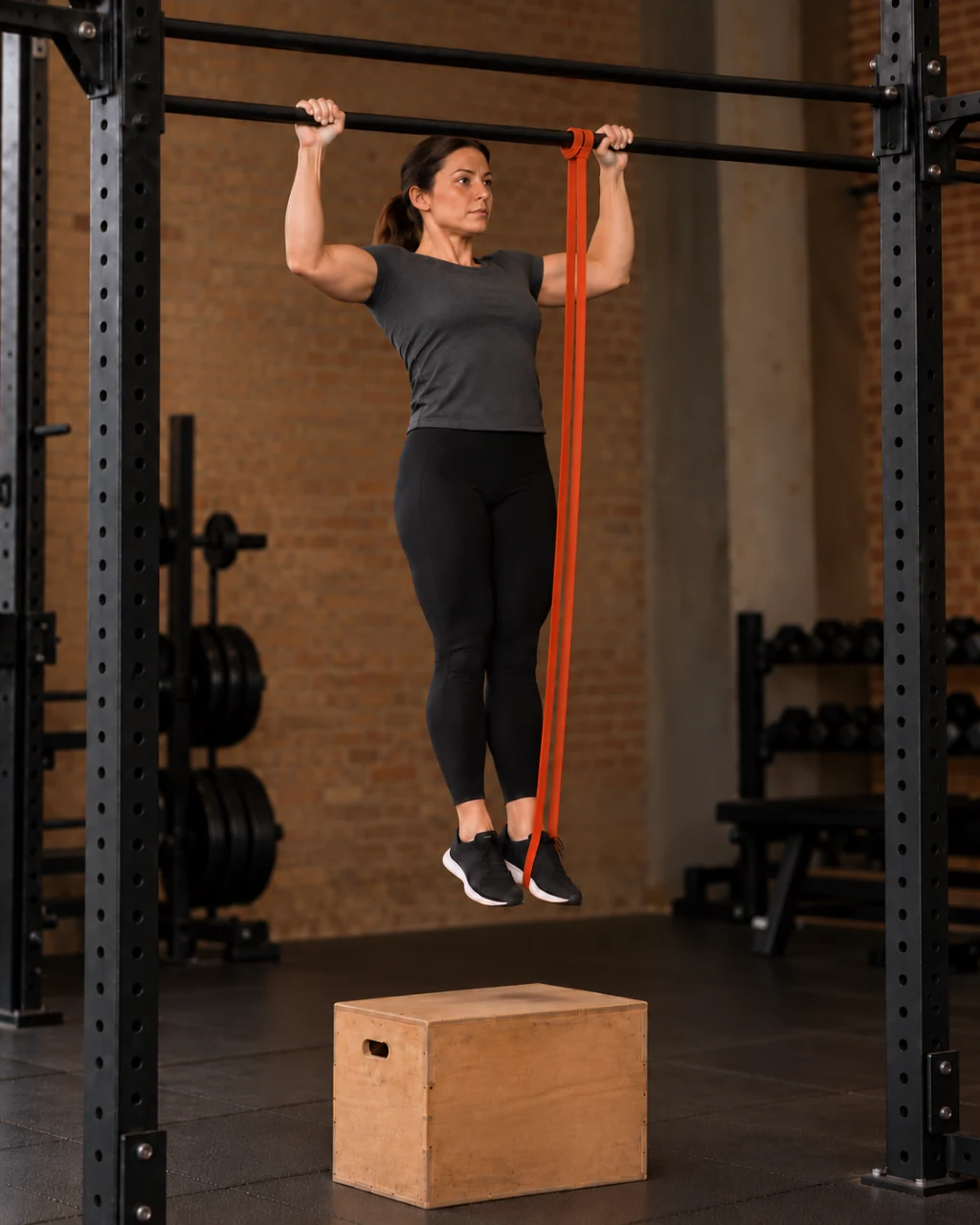 3 Slowly down |
The road there
Three kinds of work fit together on the way to a first pull-up.
Band assisted pull-ups. Use the lightest band that still lets you do every rep in full. Sets of 5–8 reps are a good place to start.
Slow lowering from the top. Step up from a box so your chin is over the bar. Then lower yourself as slowly as you can, with no band, all the way to straight arms.
Back and arm work. Rows and curls with whatever you have. If your gym has a lat pulldown or an assisted pull-up machine, keep using it too.
When to move down a band
Move to your next lighter band when you reach the top of your rep range on every set, and every set felt Clean or Fair. Clean means every rep was full and under control. Fair means it was hard work, but the form held.
A rough set doesn't earn the step, even if the reps were there. That isn't a failure. It means the band you're on still has something to teach you. Stay on it, keep it clean, and the next band will be there next time.
Your first pull-up
When you're on your lightest band and every set has looked clean, try one with no band. Do it early, right after your warm-up, while you're fresh. Dead hang, shoulders set, pull.
Give yourself up to three tries, with all the rest you need between them. If it doesn't go today, that's okay. Do your usual sets and try again another week. Every try gets you closer.
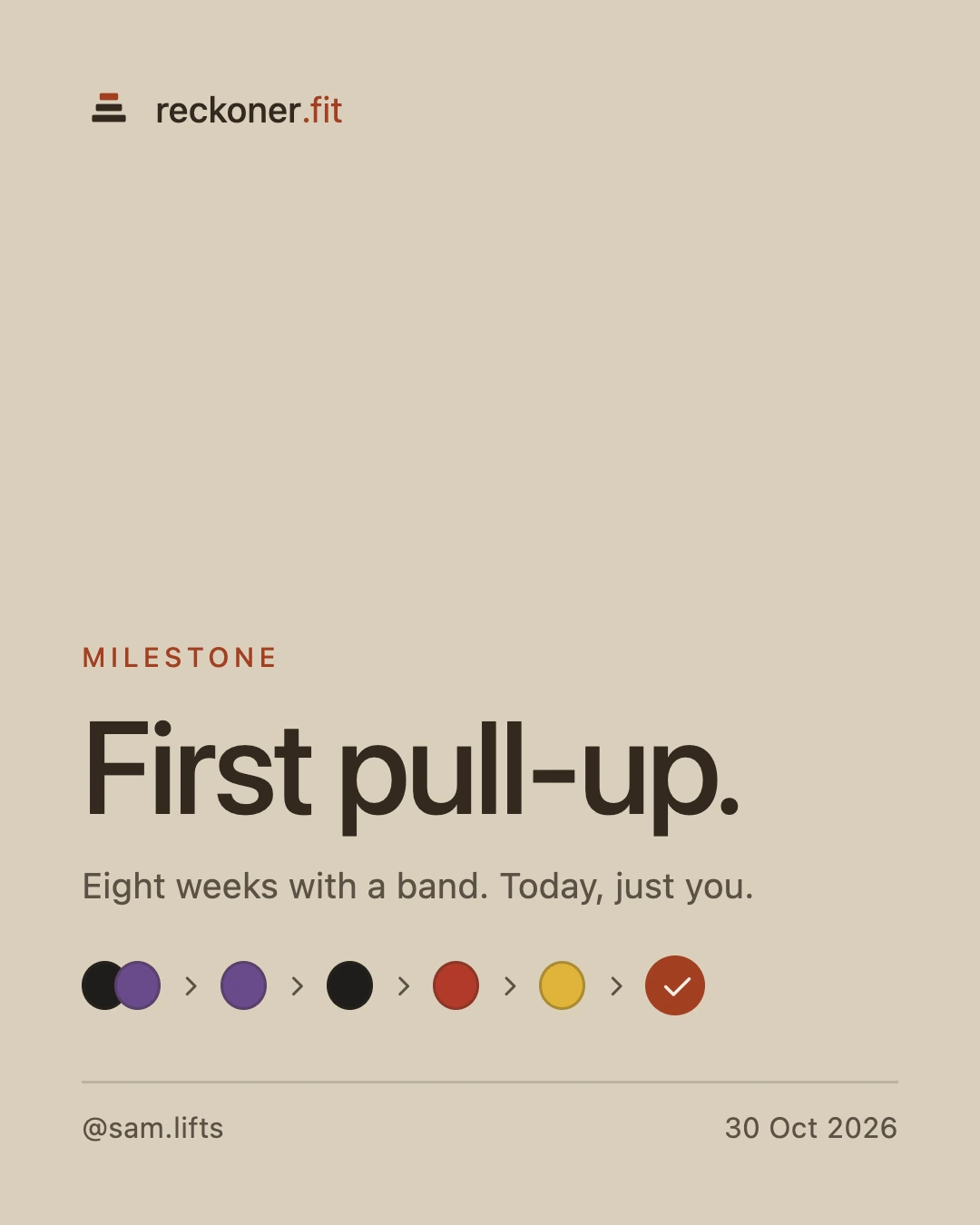
And when it goes, that's your first pull-up. Just you and the bar. Tell someone.
How Reckoner helps
Tell Reckoner which bands you own, lightest first. It suggests your next band when your sets earn it, on your phone or watch. It keeps the date you reached each one, and it marks the day of your first pull-up.