 reckoner
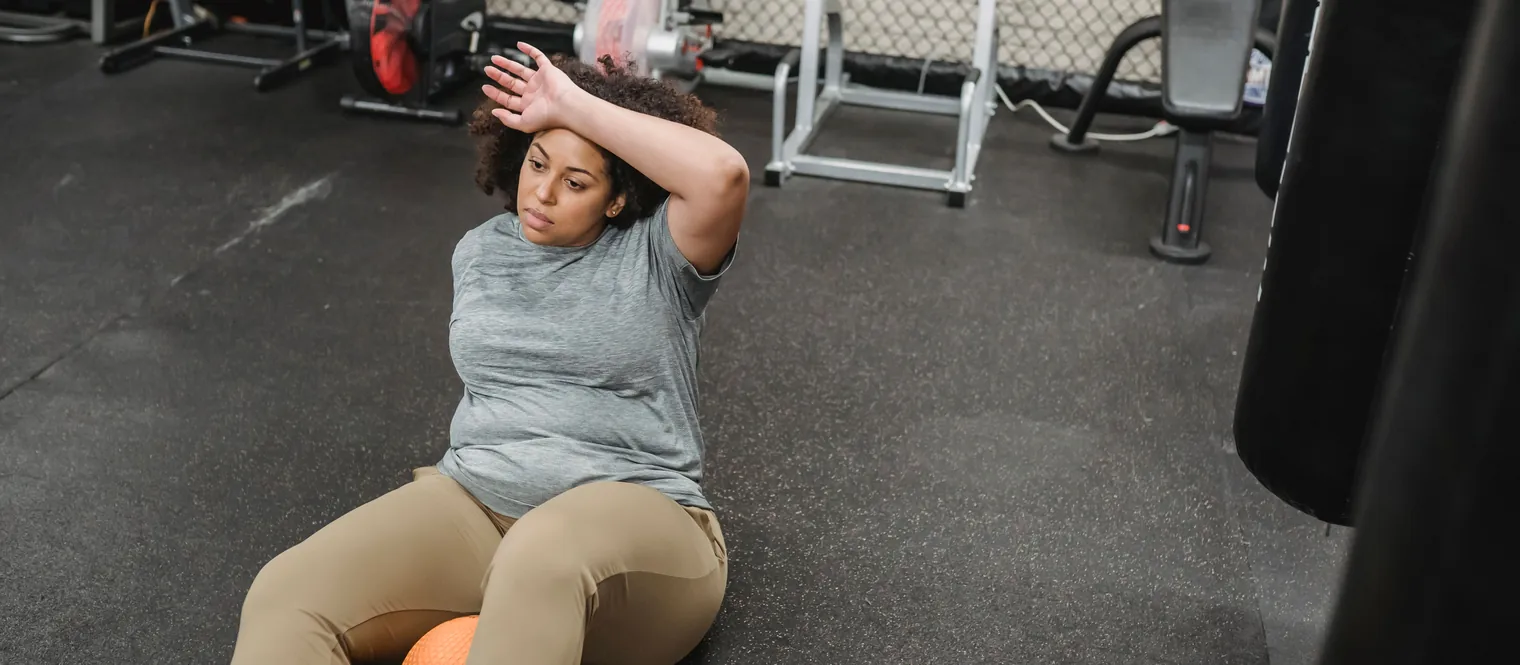
When training starts to feel awful, the usual reflex is to blame yourself. Not tough enough, not trying hard enough, push through. Most of the time a flat week really is a flat week, and it passes.
Sometimes it does not pass, and the cause is not effort at all. Two things in particular catch women who train: running low on iron, and eating less than the training costs. Neither is a character flaw, both have signs you can learn, and both are a reason to see a doctor rather than to try harder.
Why iron runs low
Iron is what your body uses to make hemoglobin, the molecule in red blood cells that carries oxygen to working muscle1. Women who have periods, and especially heavy ones, are at higher risk of running short1. Among female athletes, iron deficiency and the anemia it can lead to are five to seven times more common than among male athletes2. Training plays a part too: exercise raises hepcidin, the hormone that controls how much iron you absorb, which is one of the reasons active people run low3.
The need is genuinely higher. The NHS puts it at 14.8 milligrams a day for women aged 19 to 49, against 8.7 for men4. The US recommendation for women aged 19 to 50 is 18 milligrams a day, against 8 for men9.
The signs of iron deficiency anemia
The NHS lists these as the common symptoms5:
- tiredness and a lack of energy
- shortness of breath
- noticeable heartbeats, or palpitations
- skin paler than usual
- headaches
Less common ones include hair loss, restless legs, and wanting to eat things that are not food, like ice or paper5.
Plenty of those also describe a hard training block, which is exactly why guessing does not work. The NHS says to see a GP if you think you might have iron deficiency anemia, and the usual first step is a blood test called a full blood count5. If heavy periods turn out to be the cause, those can be treated too5.
Iron on your plate
Food is where most of your iron should come from, and the NHS says most people can get all they need from a varied, balanced diet4. Good sources it lists include4:
- red meat, and liver, though liver is one to avoid in pregnancy
- beans, such as kidney beans, edamame and chickpeas
- nuts
- dried fruit, such as apricots
- fortified breakfast cereals
Some things get in the way. Large amounts of tea, coffee, milk and dairy, and foods high in phytic acid such as wholegrain cereals, make it harder for your body to absorb iron5. That does not mean giving them up. It means your morning coffee is not the best partner for the meal you are counting on for iron.
If you eat little or no meat, iron needs more thought rather than more worry. Beans, pulses, dark green leafy vegetables and fortified foods all carry it5, and a registered dietitian can help you build a plan around them4.
Undereating, and why your body notices
Training costs energy. When you eat too little to cover it, sports scientists call it low energy availability. The International Olympic Committee's 2023 consensus describes a whole syndrome built on it, Relative Energy Deficiency in Sport, with harmful effects on health and performance in women and men alike6. The American College of Sports Medicine names low energy availability as the factor that appears to impair reproductive and bone health in female athletes7.
It does not take an extreme diet. In laboratory studies, healthy women eating below the energy level researchers use as a threshold showed suppressed hormones after as little as five days2. That is why the International Society of Sports Nutrition puts eating enough at the top of its list for women who train2.
Tired all the time is a symptom, not a personality. Get it checked.
The signs to take seriously
- Periods that stop or go irregular while you are training hard or eating less. Low energy availability is one recognized cause7, and the NHS lists missed periods among the physical signs of an eating disorder8.
- Feeling cold, tired or dizzy, a racing heart, or feeling faint8.
- Food taking over your head: a lot of time spent worrying about weight and shape, eating very little, exercising too much, or strict rules and routines around food8.
Low energy availability is linked with weaker bones as well7, so a run of injuries from not very much is another reason to say something to a doctor.
What to do
- Look at weeks, not days. One bad session is noise. A month of them is a pattern worth acting on.
- Book a GP appointment and say you train. It changes what they look for.
- Ask about iron. A full blood count is the usual starting point5.
- Eat enough to cover your training, and be wary of cutting hard while you are training hard2.
- If food has become a way to cope, see a GP as soon as you can, which is the NHS's own advice8. In the UK, the eating disorder charity Beat runs a confidential helpline on 0808 801 06778. In the US, the National Alliance for Eating Disorders runs a free helpline staffed by licensed therapists on (866) 662-123511, and ANAD runs a free helpline for support and referrals on 1-888-375-776712. Wherever you are, your own doctor is the right first call.
Reckoner reads what you lifted and how it felt. It cannot test your blood, and a run of flat sessions is a reason to see a doctor, not a reason for anybody, app or person, to guess.