 reckoner
Guide Pregnancy
Lifting during pregnancy and after birth
If your pregnancy is uncomplicated, every major guideline encourages strength training before, during and after it. What changes is your form, who signs it off, and the signs that mean stop. This page is not medical advice, and your own clinician has the final word.
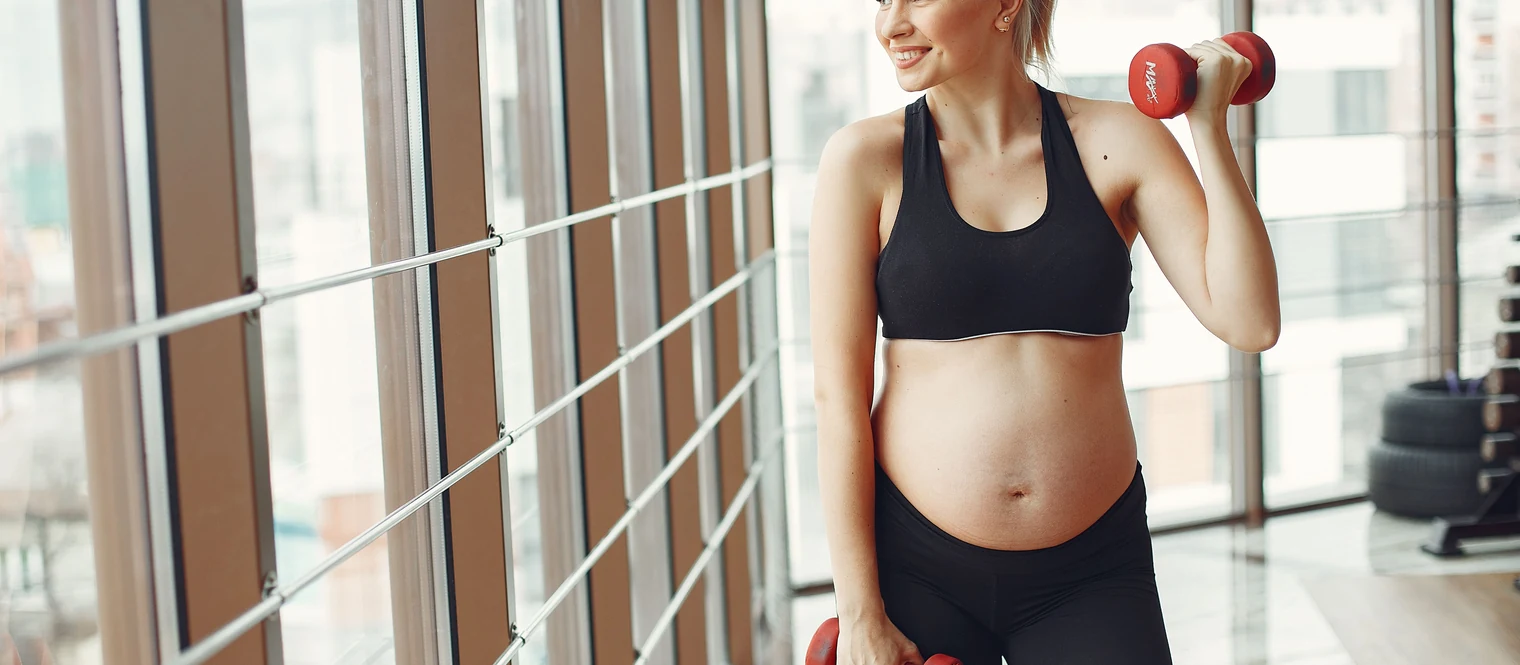
A lot of people still believe pregnancy means putting the weights down. That belief has a history. Early guidelines did not consider resistance training safe, because of worries about injury and about the breath hold many lifters use under a heavy bar1.
The guidance has moved a long way since. Here is what the obstetricians and sports medicine bodies say now, starting where every good lift starts: with form and a solid foundation.
Form first, then foundation
The International Olympic Committee's expert group on the pregnant athlete puts it simply: pay attention to technique and safety5. Pregnancy shifts your center of gravity and loosens the ligaments around your joints, which is why ACOG advises avoiding jerky, bouncy or high impact movements and anything with a real risk of falling2. Slow, controlled reps you own beat heavy, rushed ones you survive.
The foundation is your pelvic floor. The IOC group advises learning to contract it correctly, training it on purpose, and contracting it before and during a heavy lift to counter the pressure that lift puts through it5. Its recommendation is near maximal squeezes in sets of 8 to 12, three times a day on most days5. Canada's national guideline says pelvic floor training may be done daily to lower the risk of leaking urine, and recommends getting taught the technique properly3. A pelvic floor physiotherapist is the person to teach it.
The trunk matters too. More than 60 percent of pregnant women get low back pain, and ACOG notes that strengthening the abdominal and back muscles could help reduce that risk1.
What the guidelines say
The American College of Obstetricians and Gynecologists, ACOG, says women with uncomplicated pregnancies should be encouraged to do aerobic and strength conditioning exercise before, during and after pregnancy1. Resistance exercise with weights or elastic bands is on its list of exercises extensively studied in pregnancy and found to be safe and beneficial1. ACOG reaffirmed that guidance in 20231.
Canada's guideline, built on twelve systematic reviews, goes further: pregnant women should include a variety of aerobic and resistance training to get greater benefits3. The UK's Chief Medical Officers say to do muscle strengthening activities twice a week throughout pregnancy, and the Royal College of Obstetricians and Gynaecologists shares that same guidance with patients6.
The benefits are real. Following the Canadian guideline is linked with lower risk of preeclampsia, high blood pressure in pregnancy, gestational diabetes, cesarean and assisted births, and depression, and with less low back and pelvic pain3. The same guideline found exercise is not linked with miscarriage, stillbirth or preterm birth3. Its panel judged the benefits moderate and found no harms3.
The headline target is at least 150 minutes of moderate activity a week136, spread over at least three days3. If you were very active before pregnancy, ACOG says you can keep doing the same workouts with your ob-gyn's approval2. If you are new to exercise, start slowly and build up26.
Talk to your provider first
ACOG's advice is to discuss exercise with your ob-gyn during your early prenatal visits2. Most pregnant women can exercise, but women with medical or pregnancy complications need their exercise planned individually1, and the Canadian guideline lists the conditions that rule strenuous exercise out or call for that conversation first3. That conversation is the step this page cannot do for you, so have it, and bring your training with you: what you lift, how often, and how hard.
What changes in the gym
- Lying on your back. After 20 weeks, the weight of the womb can press on the large vein returning blood to your heart, so ACOG advises avoiding long periods flat on your back1. The evidence is thin either way: a systematic review for the Canadian guideline could not say whether exercising on your back is safe or should be avoided4. So Canada's rule is practical: if you feel lightheaded, sick or unwell lying flat, change position3. The IOC group suggests an incline of about 45 degrees, or doing the move side lying, seated or standing5. An incline bench press is the easy swap.
- Breath holding and heavy bracing. The IOC group advises adjusting strenuous strength training to avoid holding your breath against a closed throat, the Valsalva maneuver, and to avoid excessive pressure on the pelvic floor5. Breathe out through the hard part of the rep.
- Heavy loads. For elite athletes who want to keep training hard, ACOG advises understanding the risks, getting their provider's approval, and considering lighter loads than before pregnancy1. If a lift brings a feeling of strain or unusual fatigue, the IOC group says to change the exercise5.
- How hard. Heart rate is unreliable in pregnancy, so ACOG suggests judging moderate effort by how hard it feels, around somewhat hard, and by the talk test: if you can hold a conversation, you are likely not overdoing it1.
- Heat and water. Avoid overheating, especially in the first trimester, and drink plenty before, during and after your session2.
- Fuel. Hard or long sessions, beyond about 45 minutes, can drop your blood sugar, so ACOG advises eating enough beforehand or keeping sessions shorter or easier1. If you start losing weight while staying very active, you may need to eat more2.
- Some activities are out. ACOG lists contact sports, anything with a risk of being hit in the abdomen, activities with a high risk of falling, hot yoga and hot Pilates, and scuba diving as ones to avoid2. The UK guidance says it in four words: do not bump the bump6.
Newer research is starting to look at heavy lifting directly. In a survey of 679 people who lifted at least 80 percent of their maximum while pregnant, the authors described their pregnancy and pelvic floor outcomes as typical9, and a lab study of ten pregnant lifters found squats, bench presses and deadlifts at high intensity were well tolerated by mother and baby10. Both are small and early, and neither has changed the guidelines above. If you train heavy, they are worth taking to your provider, not a reason to skip that conversation.
Your provider decides whether. The day decides how much.
Some days will be harder than others. Canada's guideline says there may be stretches when fatigue or discomfort gets in the way, and to do what you can and come back to it when you are able3. The UK guidance says listen to your body and adapt6.
Stop and call your provider if
ACOG lists these warning signs to stop exercising, and they apply to beginners and seasoned athletes alike12. The IOC group gives nearly the same list for athletes5.
- bleeding from the vagina
- fluid gushing or leaking from the vagina
- regular, painful contractions
- pain in your abdomen
- feeling dizzy or faint
- shortness of breath before you start exercising
- chest pain
- headache
- muscle weakness that affects your balance
- calf pain or swelling
After birth
ACOG says exercise can be resumed gradually after birth as soon as it is medically safe, which depends on whether you had a vaginal or cesarean birth and on any complications; some women can start within days1. Canada's 2025 postpartum guideline, endorsed by the American College of Sports Medicine, sets out the order: start with light activity such as gentle walking and pelvic floor training, then build up to moderate and harder exercise once any cut or tear has healed and your bleeding does not increase with activity7. It recommends getting active again within the first 12 weeks, working toward at least 120 minutes a week over four or more days, with resistance training in the mix, and progressing gradually by how your body responds7.
Pelvic floor work can begin right after delivery156, and Canada recommends it daily, ideally taught by a pelvic floor physiotherapist7. Back in the gym, the IOC group's rule is pelvic floor first: squeeze it before and hold it through lifts that build pressure in your trunk, like the squat, the leg press and the bench press, and build your abdominal and back muscles too5. The UK guidance is to build back up to strength work twice a week6.
Many women notice a gap between their abdominal muscles after pregnancy, called diastasis recti. A 2025 review found postpartum abdominal training narrowed that gap, though the certainty of that evidence was low8. Leaking urine or a feeling of a bulge in the vagina are reasons to see your doctor and a pelvic floor physiotherapist, not things to train through5.
If you are breastfeeding, exercise has not been found to reduce how much milk you make or its quality17, and feeding or expressing before you train can make it more comfortable1. Being active after birth is linked with 45 percent lower odds of depression7 and lowers the risk of blood clots in the legs, which are more common in the weeks after childbirth2.
The Canadian guideline asks you to check with your provider before moderate or harder exercise if, among other things, you have severe abdominal pain, bleeding that is not a period, cesarean pain that gets worse with exercise, calf pain or swelling, chest pain, or dizziness when you train7.
The weeks after birth are not a test. Get your provider's go ahead, then build back gradually.
Where Reckoner fits
Reckoner has no pregnancy setting, so it writes your plan the way it always does. Your provider's guidance outranks any number on it, and you can always lift lighter than the plan says.