 reckoner
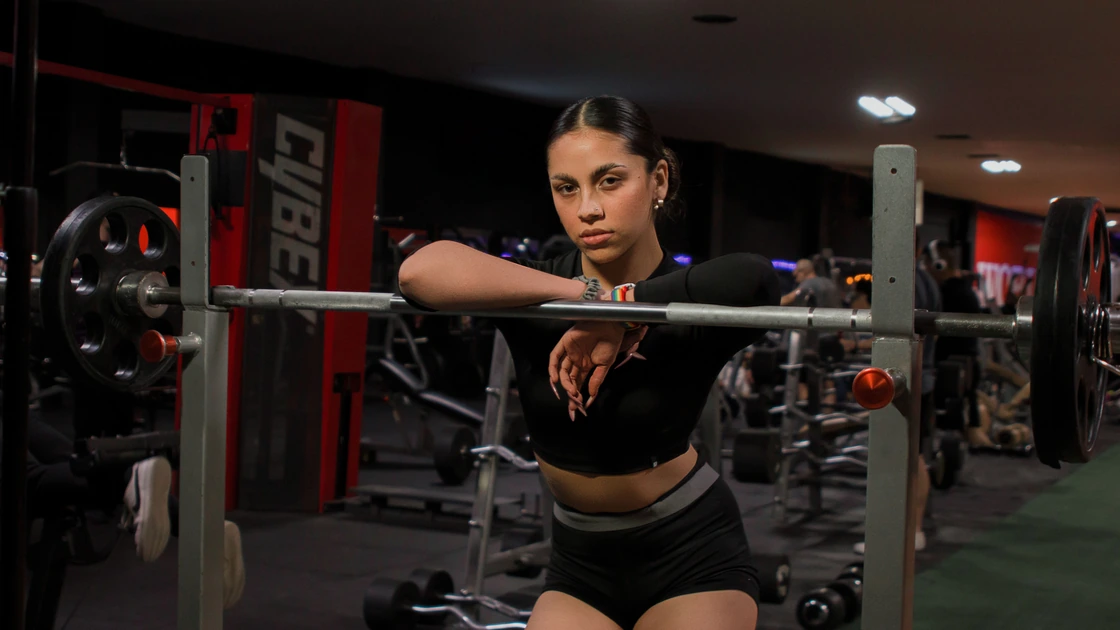
Here is a thing nobody mentions at the gym. You go for a heavy squat, a big deadlift or a set of jumps, and a little bit of pee escapes. You laugh it off, or you quietly stop doing that exercise, or you start wearing dark leggings on leg day. If that sounds familiar, you have a lot of company.
How common is it?
Very. A meta-analysis of studies on female athletes across different sports found that about 36 per cent reported leaking, and athletes were more likely to leak than women who did not exercise1. In a survey of Norwegian powerlifters and Olympic weightlifters, half of the women reported some leaking, and about four in ten leaked on effort specifically, which doctors call stress urinary incontinence2. Most of them said it affected how they performed2.
That same survey found something else. About four in ten of the women did not know why you would train your pelvic floor, and a similar number did not know how2. So if nobody has ever talked to you about this, you are not behind. Hardly anybody gets told.
Is lifting bad for your pelvic floor?
Not in any simple way. A review in Sports Medicine weighed the two popular ideas, that exercise strengthens the pelvic floor and that it overloads it, and found support for parts of both3. Women who exercise generally have pelvic floor muscles as strong as, or stronger than, women who do not. Gentle activity like walking lowers the risk of leaking. Female athletes, though, are about three times more likely to leak than women who do not train, and there is some evidence that strenuous exercise can cause or worsen a prolapse, though that evidence is inconsistent3.
The authors also make the point that matters most for you: how much pressure your pelvic floor can take differs from one woman to the next, so the line between helpful and too much almost certainly does too3. Heavy lifts and jumps raise the pressure inside your belly, and that is the load your pelvic floor has to hold against1. Leaking is not a sign you should quit. It is a sign worth acting on.
What actually helps
Pelvic floor muscle training, the squeeze and lift exercises often called Kegels, has strong evidence behind it. A Cochrane review of 31 trials found that women with stress leaking who did the training were about eight times more likely to report being cured than women who did not, 56 per cent against 6 per cent4. Side effects were rare and minor4.
How you do it matters. The NHS says a program should include at least 8 squeezes, at least three times a day, for at least three months5. The UK's NICE guideline recommends supervised training for at least three months for women with stress leaking6. Supervised is the important word: a pelvic health physiotherapist can check that you are squeezing the right muscles and build the program around what they find.
One honest note. Almost all of that research is in women in general, not lifters. The only trial in lifters so far was a pilot with three women: all three got stronger pelvic floors, one leaked less, one saw no change and one got worse7. Bigger studies are still to come, so a specialist who can tailor things to you is worth more here than a generic routine.
On training days
- Swap the lift that leaks. If one exercise sets it off every time, swap it for another movement in Reckoner while you work on it. You can swap it back later.
- Read up on bracing. How you breathe and brace under a heavy bar changes the pressure you create. Bracing and breathing for heavy lifts covers the basics, and a pelvic health physio can tell you how to apply it to your own body.
When to see a doctor
- Any leaking at all. The NHS says to see a GP about any type of urinary incontinence and not to feel embarrassed about it8. A GP can refer you to a continence service, and in some areas you can refer yourself5.
- Heaviness, pressure or a bulge. A feeling of heaviness or pressure in your lower tummy or vagina, or a bulge or lump there, can be signs of pelvic organ prolapse, and the NHS says to see a GP9. With a prolapse the NHS advises avoiding activities that strain the pelvic floor, heavy lifting among them, so get checked before you load up again9.
- Pregnant, or had a baby recently? That is its own subject, with its own guidance. Talk to your doctor or midwife before changing anything.
Common is not the same as something you have to put up with.