 reckoner
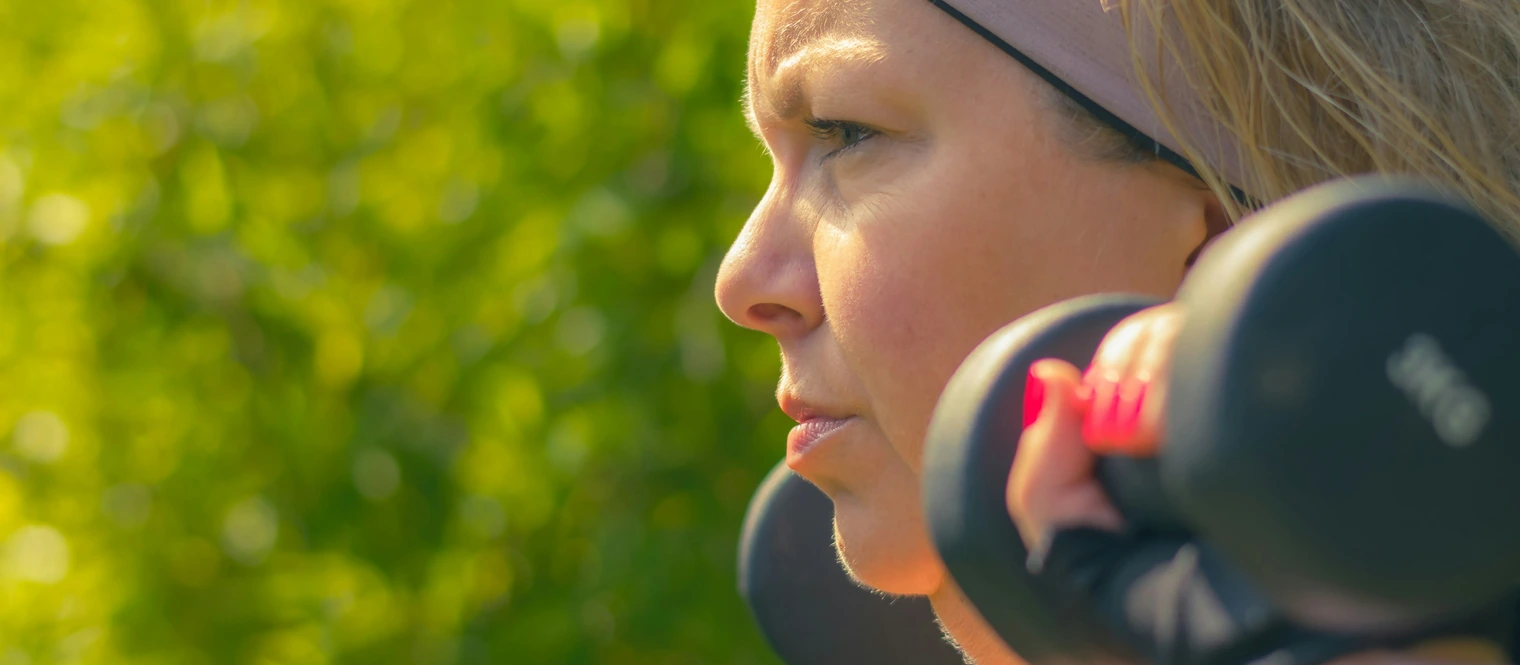
There is a quiet assumption that midlife is the time to ease off. Swap the barbell for gentle stretching, accept getting a bit weaker every year, and call it aging gracefully.
The evidence points the other way. The years around menopause are when your bones need load the most, and when the muscle you keep starts to matter more than it ever has. This is the time to lift, not the time to stop.
What actually changes
Menopause is when your periods stop because of falling hormone levels. It usually happens between 45 and 55, and it is defined as twelve months without a period; perimenopause is the stretch before it when periods become irregular1. Common symptoms include hot flushes, sleep problems, low mood, brain fog, muscle aches, joint pains and weakening bones2.
The bone change is the one you cannot feel. A long study of women from four ethnic groups found that bone loss began about a year before the final period and was fastest from then until two years after it3. Over ten years they lost 10.6 per cent of their spine bone density, and about seven of those percentage points went in that three year window3.
Muscle drifts too. Older adults tend to lose muscle, a condition called sarcopenia, and strong muscles are part of what keeps you balanced and stops a fall from becoming a fracture4.
This is a long stretch, so plan for it
Symptoms usually last seven to nine years, sometimes longer, and they change along the way: hot flushes may ease and give way to low mood or anxiety, and joint pain can carry on after menopause itself2. That is a long time to put training on hold waiting for things to settle. It is better treated as a season you train through, adjusting as you go.
Some of the NHS's own suggestions for symptoms translate straight into the gym. For hot flushes it suggests lightweight clothing, keeping cool with a fan or a cold drink, and regular exercise5. For mood it suggests rest, relaxing activities and regular exercise5. A cool room, a water bottle and a session you can scale back on a bad night are not small things.
Joint pain deserves its own care. Muscle aches and joint pains are listed menopause symptoms2, and Training around pain helps you tell which kind of pain means change the lift and which means get it looked at.
Why lifting is the answer the evidence keeps giving
The NHS's own list of things you can do for menopause tells you to exercise regularly, with a focus on weight bearing and resistance exercise, using weights, to help protect against weakening bones5. It recommends regular exercise for low mood and for hot flushes as well5.
And heavy is not off limits. In the LIFTMOR trial, women past menopause with low bone mass lifted twice a week at more than 85 per cent of their maximum for eight months. Their spine bone density went up while a low intensity group's went down, their physical function improved, and the researchers reported no adverse events beyond one minor back spasm6. They were screened and closely supervised6, which matters, but the result runs against the old idea that heavy lifting is too risky for this group.
Protein matters a little more now as well. The International Society of Sports Nutrition describes anabolic resistance, the way muscle answers food less readily with age, and suggests that women around and after menopause have a serving of protein rich in essential amino acids close to their training to help overcome it7. In practice that is a proper meal or snack with protein in it, not a special product.
Midlife is not the time for lighter weights. It is when they matter most.
How to train through it
- Keep lifting, or start. Muscle strengthening at least twice a week is the federal guideline the NIH points to, and for older adults alongside balance and aerobic work4. If the barbell is new, Strength training for beginners is the place to start.
- Let the weights climb. Build up gradually and learn the lifts well. The trial that moved bone density used heavy loads6.
- Use the day you have. Bad sleep and hot flushes will make some sessions flat. The International Society of Sports Nutrition recommends that women around and after menopause track how they feel against their training and recovery to learn their own patterns7. What does a rough day change? covers how Reckoner handles a flat day.
- Add balance and some impact where your joints allow. The NIH recommends both alongside resistance training for bone4.
- Eat enough protein. The same society advises women around and after menopause to aim for the upper end of 1.4 to 2.2 grams per kilo of bodyweight a day7.
When to see a doctor
Hormone therapy is a medical decision with its own benefits and risks, and the NHS notes that it can reduce the risk of osteoporosis5. That is a conversation for your doctor, not this page.