 reckoner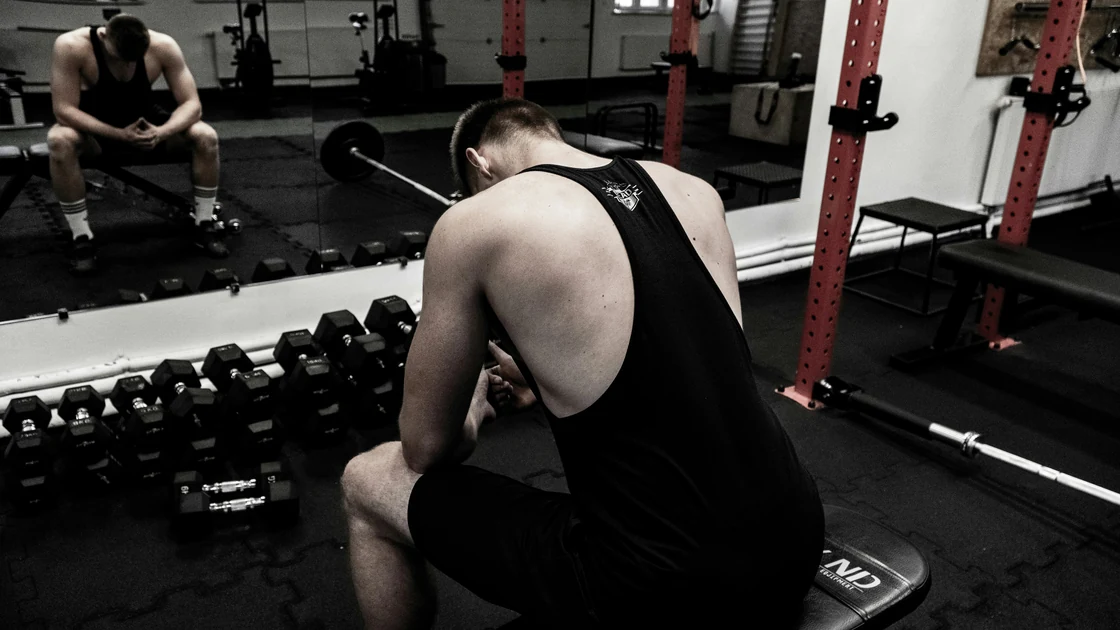
Everyone in the gym was new once. Most of them are still new at something, because a sensible program changes its exercises from time to time, and nobody walks in already knowing a movement they have never done. So the feeling of not knowing what you are doing is not a sign you do not belong there. It is what the first few sessions of anything feel like, and it fades faster once three things are in place: a plan, a light first weight, and a few manners.
The feeling is common, and it is not a flaw in you
A 2026 paper on gym anxiety makes the case that it is a response to a setting rather than a disorder. Many people never feel it. Some do, and for them it is an understandable reaction to a room that seems to belong to people who are fitter, stronger or more sure of themselves1.
It is not only beginners who feel it. In one survey of men who already lifted, reported in that paper, a third said somebody hovering to use their equipment made them anxious, and about a quarter said the same of a trainer correcting their form1. A systematic review of women's experiences of strength training found the same ground from another side: not knowing enough about lifting, having nobody to show them, and remarks from other people were among the things that stopped women training, while company and encouragement kept them going2.
Nobody is watching as much as it feels
In a well known experiment, students were sent into a room wearing a T-shirt they found embarrassing, then asked how many of the people there had noticed it. On average they guessed twice as many as actually had3. It is an old study, and it is still the one the effect is named after. The people in that room were busy with their own work. At the gym they are busy with their own sets: counting reps, resting, looking at their phone. Most of what they see of you is somebody lifting.
Know what you are doing before you walk in
For a lot of people the hardest moment in a gym is standing in the middle of it wondering what to do next. A plan removes that moment. People who keep lifting tend to be the ones who feel able to do it, who plan and track their own training, and who have somebody leading the program4. Those are associations rather than proof that a plan causes anything, and they all point the same way.
With Reckoner, today's session is on your phone and on your watch before you arrive: which lifts, how many sets and reps, and what weight. You walk from one lift to the next because the next one is already written down, and anybody glancing over sees somebody following a plan, because you are.
Everyone is a beginner at a new exercise
Strength is partly a skill, and the skill belongs to the movement you practice. A systematic review of forty-three training studies found that strength in the movement people trained rose about twice as much as strength measured in a way they had not trained5. So an experienced lifter meeting an exercise for the first time is, for a session or two, learning it the way you are. Starting light on something new is not a beginner's habit. It is what learning a lift looks like at any level.
Everybody is new at the exercise they have never done.
Start light and get one set watched
Your first weeks are for the shape of each lift, not for the number on it. A weight light enough to get right is the one to learn with, and good lifting form covers what right looks like. Add weight next session rather than in the middle of this one.
Then get one set looked at. Feedback on your own movement works: in a trial of thirty people learning the squat, those shown video of their own squats after each set, with what needed correcting pointed out, improved their technique and kept much of it a week later. A group given no feedback did not change6. Staff can do this for you, a friend who trains can, or your own phone propped against a bench can. Reckoner's log suggests asking a coach or an experienced lifter to watch one set the first time you do a movement, and unless you turn form tips off, the watch shows a short form cue before the lift the first three times you do it.
The manners that matter
Gym etiquette is shorter than it looks, and all of it comes down to leaving the place as usable as you found it.
- Put weights back. Plates off the bar, dumbbells back on the rack where they came from.
- Wipe down what you used. Benches, handles and pads, once you are done with them.
- Ask rather than hover. If you are waiting for something, ask how many sets are left. Hovering topped the list in that survey of men who lift, so asking is a kindness as well as a question.
- Ask to work in. Working in means taking turns on the same equipment between sets. Asking is normal, and so is saying yes when somebody asks you.
- Give people room. Keep your bag out of walkways and do not stand between somebody and the mirror while they are lifting.
Nobody expects you to know how every machine adjusts on your first day. Asking how one works is also allowed.
A checklist for your first few sessions
- Read today's session before you leave home, so you know the lifts and the order.
- Go at a quieter time for the first week or two if your day allows it.
- Take an orientation if your gym offers one, or bring a friend who trains.
- Warm up with lighter sets of your first lift. How many warm-up sets covers how many.
- Start lighter than you think and add next session. The beginner strength program covers how to pick a first weight.
- Get one set watched, by a person or by your phone.
- Rerack, wipe down, and ask before you share.
- Log it while you are standing there, not later from memory.
Everyone was new once. Come back for the next session.