 reckoner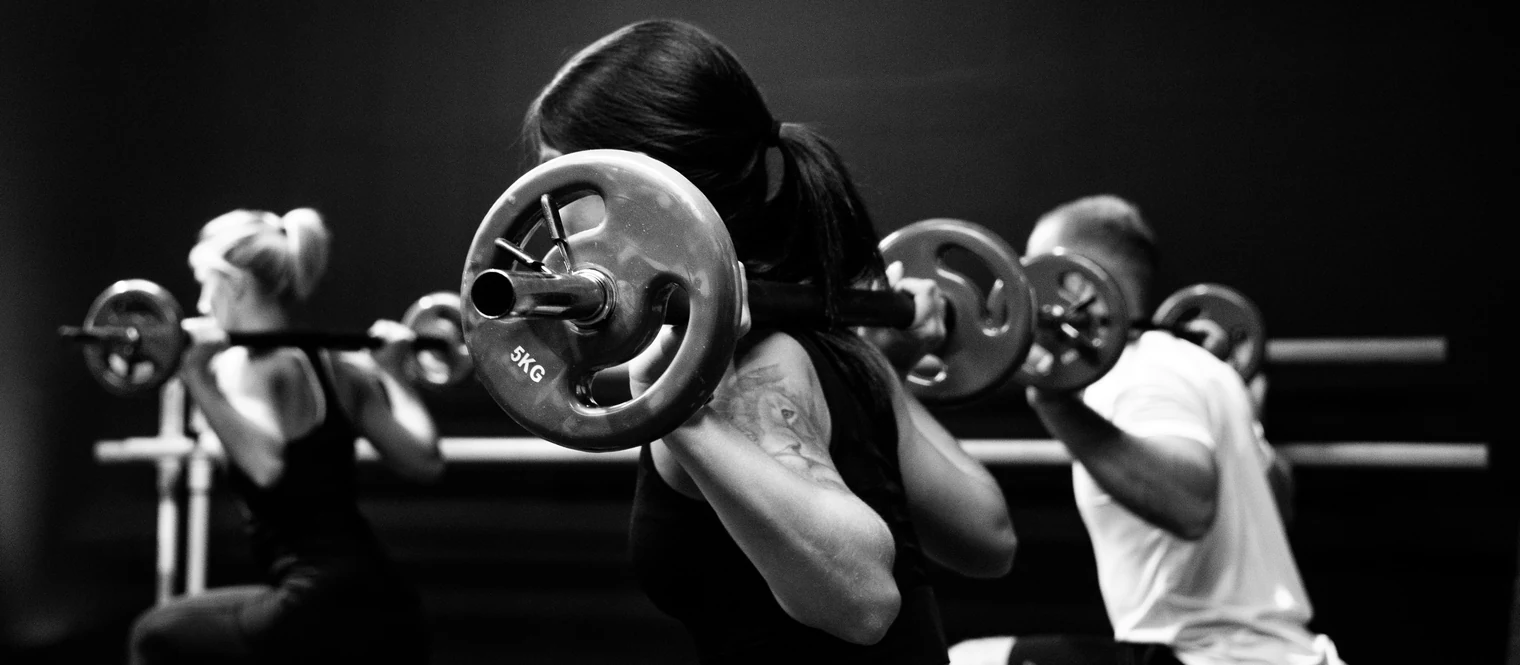
Most lifters meet form as a list of warnings. Keep your back flat. Keep your knees behind your toes. Chest up. Break a rule and you get hurt, follow them all and you are safe. So form becomes something you check once, pass, and stop thinking about while you get on with the real work of adding weight.
That gets it backwards twice. Several of the best known rules are weaker than they sound, and form is not a test you pass once. It is a skill that holds up or slips on every set, and it slips most on the sets you care about most: the heavy ones and the last ones. Whether it held is the question that should decide what your next week looks like.
What good form is
Good form is the same rep, done the same way, every time. Reckoner puts it in three parts, and they are the words it uses when it asks you: every rep taken through its full range, under control, with the target muscle doing the work.
- Full range. The squat reaches the same depth on the tenth rep as on the first. The press starts and finishes in the same place every time. The range does not quietly shrink as the set gets hard.
- Control. You lower the weight at a speed you could stop at any point, and you lift it without a bounce, a heave or a swing supplying the part your muscles did not.
- The right muscle. A curl is the arms, not the lower back. A row is the upper back, not a hip thrust with a dumbbell attached. When momentum or another body part takes over, the exercise has changed even though its name has not.
Notice what is not on that list: one correct angle for every joint. A systematic review of experienced lifters in the squat, the bench press and the deadlift found that different lifters adopt different mechanical strategies as the load climbs, with large differences between individuals1. Your limbs and your hips are your own. Good form for you is the version you can repeat, through a full range, under control.
Why it matters
It is what makes progress measurable. If this week's squat stops higher than last week's, the heavier bar is not progress. It is a different and easier lift wearing the same name. Only a rep that looks like last week's rep lets you compare the two, and that is plain arithmetic rather than a research finding.
The full range is part of what makes the training work. The American College of Sports Medicine's 2026 position stand, an overview of more than a hundred systematic reviews, found that strength improved more when lifting went through a complete range of motion2. A partial rep is not a free rep. It trains less of the movement.
And it does not hold still. A heavy set wears it down, which is why form and effort have to be read together.
Form and fatigue
Form is not fixed at the start of a set. It wears down as the set goes on and as the bar gets heavier. The same systematic review found that as the load rose the bar slowed and joint positions varied more, and that fatigue slowed the bar in the same way1. In the squat, the knees tended to straighten ahead of the hips as the load climbed, which tipped the torso forward and pushed the bar off its line1. Those were experienced lifters, and the review notes that trained lifters generally keep their technique more consistent than untrained ones1.
That is why effort and form are one conversation. Reckoner asks how hard a lift was in reps in reserve: how many more reps you could have done with good form when you stopped. The idea comes from a rating scale built for lifting, where a ten means nothing left, a nine means one left, and so on down3. The words with good form are doing the work. A rep you could only have ground out by changing the movement is not a rep you had left.
The count is not perfect, and it is better than you might fear. A scoping review and meta-analysis covering more than four hundred lifters found that people underpredicted how many reps they had left by about one on average, that the prediction got more accurate closer to failure, and that training status did not measurably change how accurate it was4. So a beginner's count is worth taking seriously, and the last rep or two of a hard set is where the count is most reliable and where form is most likely to slip.
Fatigue can also cost you the learning. A 2026 systematic review of forty-three motor learning experiments found that local muscle fatigue was the kind most likely to disrupt learning a new skill5. Those were laboratory tasks, not barbell lifts, so the step to your squat is reasoning rather than a finding: a movement practiced while your muscles are giving out is probably a movement you learn less from.
Form versus progress: Clean, Fair, Rough
If form decides whether a rep counts, it should decide whether the weight goes up. That is the idea behind the three answers Reckoner asks for after each lift:
- Clean. Every rep: full range, controlled, the target muscle doing the work.
- Fair. A few reps were shortened, rushed, or used momentum.
- Rough. The weight took over. Range or technique broke down a lot.
The same answer means different things at different efforts. Fair with plenty left in the tank means the flaw is a skill to practice at this weight: you were well short of failure and the reps were there. Fair with one good rep left, or none, means the flaw showed up at the edge, and asking for one more rep next week asks for it exactly where technique drifts. Rough means the weight won, however hard the set felt.
Reckoner could find no trial that has tested a rule like this: no study of a lifter's own form rating used to decide progression, and none checking a self-rated form answer against a camera or a coach. So this is coaching judgment informed by the evidence above, not a tested rule, and Reckoner lets it pull one way only: your form answer can hold your progress or ease it back, and it can never push it forward.
Clean reps first. The weight can wait a week.
How Reckoner uses it
The question
After each lift you answer two questions. The first is effort. On the watch it reads Good reps left?, and on your phone Could you have done more with good form? The second is How was the form?, with Clean, Fair or Rough. On the watch Clean is already selected, so a good lift costs one press. Every lift counted in reps is asked. Planks, holds and carries are asked too. On those, Rough, or Fair on a hold that took everything you had, keeps next week's time where it is rather than adding seconds. The rules below are for lifts counted in reps.
The hold
- Clean changes nothing. The lift moves on by the usual rules: reps first, then weight.
- Fair or Rough holds the weight where it is whenever it would otherwise have gone up.
- Rough, or Fair with one good rep left or none, also holds the reps where they are rather than asking for one more. On a lift with no weight left to add, it holds back the extra set that lift would otherwise have earned.
- Fair with two or more good reps left still lets the reps climb, because a flaw that shows up well short of failure is one to practice rather than to wait out.
- Rough on two sessions running of the same movement takes the weight down one step, to give the reps room to be clean.
A hold never takes reps away, and a form answer never adds weight. When form is what changed the plan, your week says so in a sentence beside the lift, so you can tell the form answer held it rather than the effort. How Reckoner decides to add weight covers the rules a Clean lift moves on.
The cue
Every movement in Reckoner's library carries one short form cue. For a goblet squat it is Elbows inside the knees at the bottom. On the watch the cue shows before the lift the first three times you do a movement, and again the next time after you answer Fair or Rough, so the reminder comes back when it is most useful. Show form tips in Setup turns it off, and it is on by default. On your phone, the log suggests asking a coach or an experienced lifter to watch one set, the first time you do a movement and after a Rough answer.
Myths about form
- Your back must never round when you lift. A systematic review with meta-analysis asked whether more bending of the lower back while lifting predicts low back pain or marks out the people who have it, and found low-quality evidence that it does not6. That is not a reason to lift with a rounded back on purpose. It is a reason not to treat a back that bends a little under load as an emergency.
- Your knees must never pass your toes in a squat. When a study blocked lifters' knees from traveling forward, the load at the knee fell, the load at the hip rose sharply and the torso leaned further forward, and the authors concluded a squat may need the knees to move slightly past the toes7. It was a small study of seven trained men, so read it as a reason to distrust the rule rather than as a new rule of its own.
- Lifting is dangerous unless your form is perfect. A systematic review of the weight training sports, from powerlifting and weightlifting to bodybuilding and strongman, found relatively low injury rates compared with common team sports8. Form is worth caring about because it keeps the training working, not because every untidy rep is a disaster waiting to happen.
- A set only counts if you grind out every last rep. The 2026 position stand found that training to failure was not necessary for gains in strength, size or power, and that stopping two or three reps short is enough effort2. Form slips most as fatigue builds and the weight gets heavy1. What training to failure is worth goes further into it.
Foundation first
Everything above points the same way. Build the movement before you load it, and let the weight follow the form rather than the other way round.
- Learn each movement light. Your first weeks are for the shape of the lift, and a weight light enough to get right is the one to learn with. Strength training for beginners covers how to pick it.
- End the set when the shape changes. The bar drifting forward, the hips rising first, the depth getting shorter: any of those is the end of the set, whatever number you had in mind.
- Film a set, or ask someone to watch. In a randomized trial of thirty people learning the squat, those shown video of their own squats after each set improved their technique, and much of the improvement was still there a week later, while a group given no feedback did not change9.
- Answer the form question honestly. A Fair answer holds the weight for a week. Calling a Fair set Clean buys a heavier bar the reps have not earned, and the week after is the one that shows it.
- Stay on a program long enough to see it work. Form and weight both improve over weeks, not sessions. The beginner strength program is one written on exactly these rules, and the reps in reserve guide covers how close to failure is worth going.
Same rep, same shape, every set. Then add the weight.