

Answer Scale weight
Why did the scale go up when I started lifting?
Almost always water, not fat. Recovering muscles hold fluid, stored fuel comes with water, and your cycle adds its own swing. Give it a month and judge by the tape and the bar.

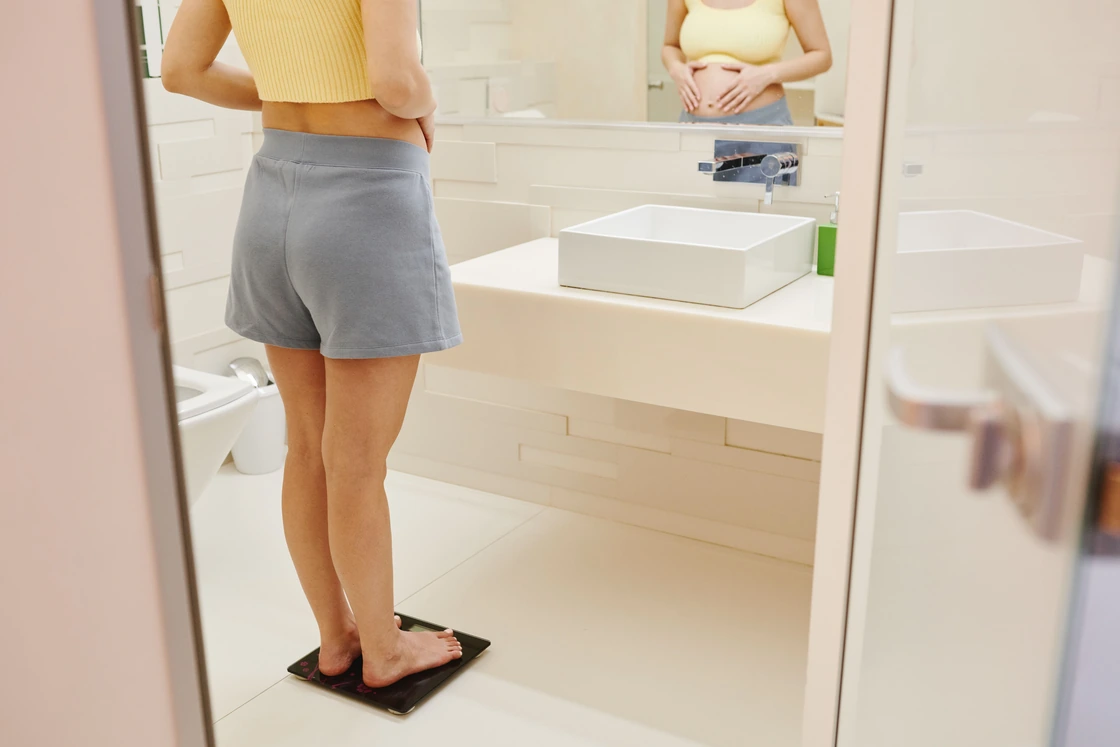
You did everything right. You started lifting, you turned up, you even began to enjoy it. Then you stepped on the scale two weeks in and it had gone up. If your first thought was that lifting is making you bigger, take a breath. That is almost never what is happening.
Your muscles are holding water while they recover
New training is a shock to a muscle, and a muscle recovering from a shock holds extra fluid. Researchers scanned the thighs of people new to lifting. By the third week the muscles measured bigger, but a large part of that increase may have been swelling from the training itself rather than new muscle, and it had largely settled by the tenth week1. That study was in young men, so take the detail as a guide rather than a promise.
So for the first few weeks some of the number on the scale is your body doing exactly what it should: patching things up so they come back stronger.
Fuel comes with water attached
Muscles store carbohydrate as glycogen, and glycogen does not travel alone. Each gram is stored with at least three grams of water2. If you have started eating a little more to fuel your sessions, which is a good idea, some of it shows up on the scale as water sitting in your muscles. That is fuel in the tank, not fat.
Your cycle moves the number too
If you have a menstrual cycle, it adds its own swing. In a year of daily diaries from sixty-two women, the feeling of holding fluid peaked on the first day of the period and was lowest in the days after the period ended3. That is one reason the number can wander across a month with nothing real changing. Compare like with like: the same point in your cycle, month to month.
What to watch instead
- The weekly average, not the daily number. One weigh-in tells you about yesterday's dinner. Four of them in a row start to tell you about you.
- The tape, once a month. A waist measurement says where a change went, which the scale cannot. How to take body measurements shows you how to do it so the numbers mean something.
- The bar. If the weights you lift are going up, the training is working, whatever the scale says this week.
And if you are still worried about getting bigger than you want to, will lifting weights make me bulky? has the reassuring answer.
Give it a month. Watch the bar, not the bathroom scale.