 reckoner
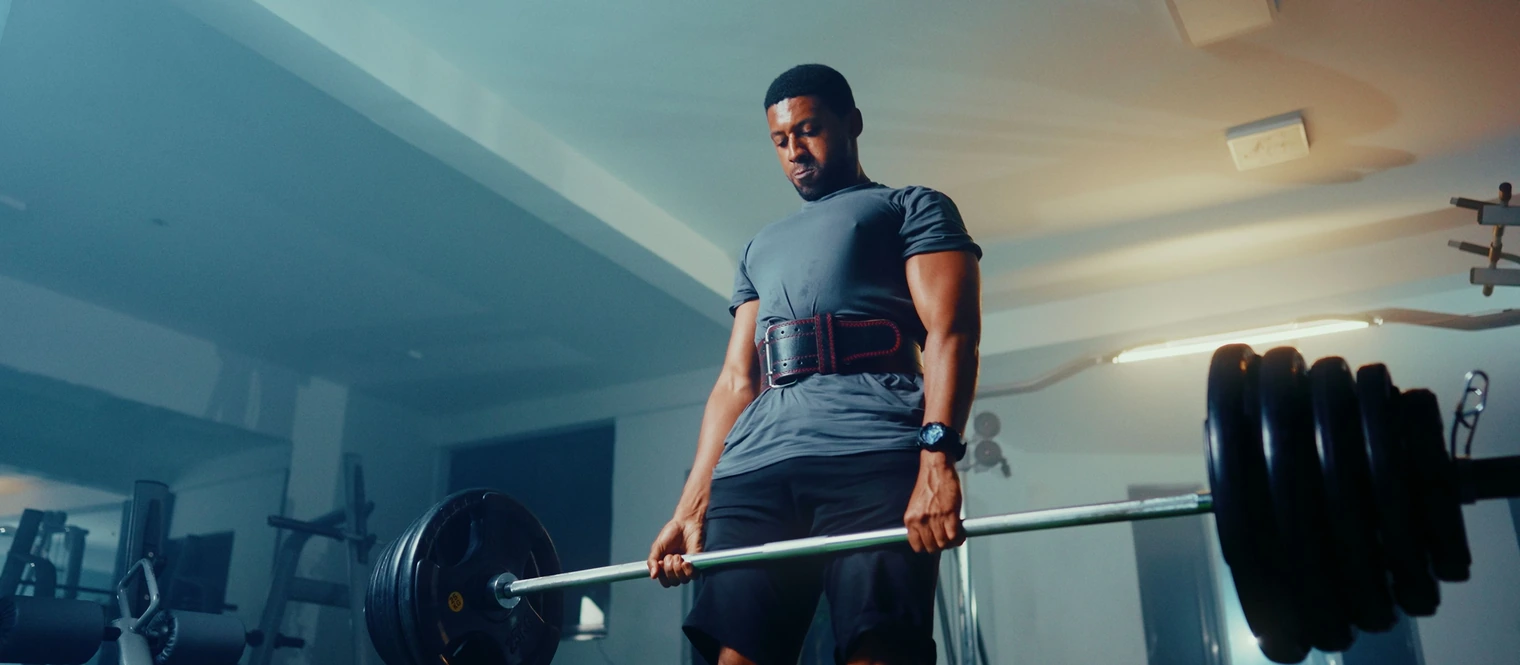
Most lifters are told two things about breathing, and they contradict each other. One says never hold your breath, breathe out as you lift. The other, from anybody who squats heavy, says take a big breath and hold it. Both are right, for different sets, and knowing which applies when is most of what there is to learn.
On light and moderate sets you can breathe steadily and should. On a heavy rep you will hold your breath whether you mean to or not, so the useful skill is doing it on purpose: a full breath, a tight trunk around it, held through the hard part of the rep. That is bracing, and it is the base every heavy lift stands on.
What bracing does
Holding a breath against a closed throat and tightening the trunk is called the Valsalva maneuver. A review of the research found that it raises the pressure inside the abdomen, that this pressure climbs as the load and the effort climb, and that it may help keep the spine stable and the trunk rigid under a heavy load1. The same review notes that a brief breath hold is unavoidable when lifting more than about eighty per cent of your maximum, or when taking lighter sets close to failure1.
Which lift you are doing changes how much. A systematic review of sixteen studies found the highest abdominal pressure in the squat, followed by the deadlift, the row and the leg press, and the lowest in the bench press2. The lifts that load your spine the most are the ones where a good brace matters most.
Breathe in, brace, then move. The brace comes before the bar does.
How to brace
- Set up first. Get your feet and your grip where they belong before you breathe. Bracing is the last thing you do before the rep, not the first.
- Take a big breath, low. Breathe in through your nose or mouth and send it down into your belly and sides rather than up into your chest. Your waist should get wider all the way round, back included, and your shoulders should not rise.
- Tighten around it. Brace your whole trunk as if somebody were about to push you in the stomach. Do not suck your belly in. You are making it firm, not small.
- Hold it through the hard part. Keep the breath and the tension through the lowering and through the sticking point of the lift on the way up.
- Breathe out at the top, then reset. Let the air out once the rep is done, take a fresh breath, and brace again before the next one. On a heavy set every rep gets its own brace.
Practice it light. A brace is a skill, and the warm-up sets are the place to rehearse it so that it happens on its own when the weight is heavy.
Belts
A lifting belt gives your trunk something to brace against. In the studies the abdominal pressure review gathered, wearing a belt raised that pressure further during squats and deadlifts2. A belt does not brace for you. It is a tool for heavy sets once you can already brace well without one, and nobody needs one to start lifting.
The safety side
A heavy brace comes with a large and brief rise in blood pressure. In a classic study of five experienced bodybuilders, blood pressure measured directly in the artery during heavy leg presses averaged 320 over 250, and one lifter went above 480 over 3503. The rise came from the effort and the squeezing of blood vessels by the working muscles as well as from the breath hold, and it happened even with a small muscle such as the biceps3. That study is small and decades old, so read its numbers as a sense of scale rather than as what happens to you.
For healthy lifters, the review of the evidence concluded that the health risks of bracing during resistance exercise remain unconfirmed1. Some people should be more careful:
- High blood pressure or heart disease. The abdominal pressure review recommends against heavy breath holding for people with high blood pressure, and suggests lifts such as the bench press and the row as gentler choices2. The American Heart Association's 2023 statement says people whose blood pressure is controlled can safely do low to moderate intensity resistance training with proper breathing4. Talk to your doctor about how heavy to go, and breathe steadily through each rep rather than holding.
- Glaucoma or another eye pressure condition. Pressure inside the eye rose during the bench press in a study of thirty people, and it rose more when they held their breath on the last rep than when they breathed out5. Ask your eye doctor before training heavy.
- New to heavy lifting. Build up to heavy squats and deadlifts over weeks of lighter training rather than starting there, which is what the abdominal pressure review advises for untrained people2.
Breathing on lighter sets
Most of your sets are not near your maximum, and they do not need a full held brace. Keep your trunk firm, breathe in as you lower the weight and out as you lift it, and let the breath and the rep keep the same rhythm. Save the full brace for the sets where the weight asks for it. Good lifting form covers the rest of what makes a rep repeatable.