 reckoner
Guide Gaining weight
Building muscle when you are naturally thin
If you have always been the thin one, the lifting is usually the easy half. Eating a little more than feels natural, every day, is where most thin lifters stall, and it is a problem with practical answers.
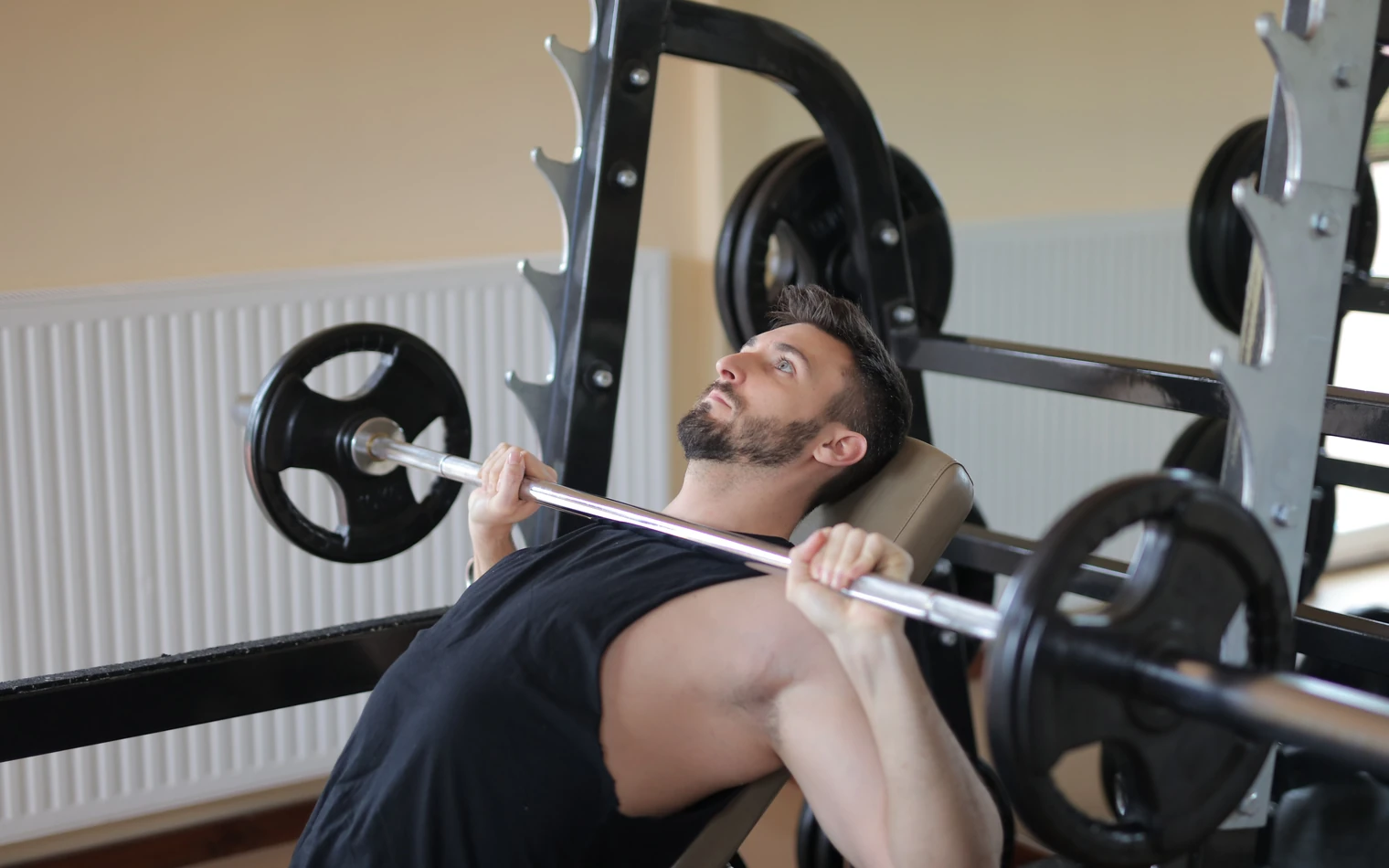
If you were the skinny kid at school, you have probably heard every theory going. You have a fast metabolism. You are a hard gainer. You need to eat everything in sight, or drink a gallon of milk a day, or find the one supplement that finally works.
Most of that misses the point in one direction or the other. Your body is not refusing to build muscle. It is building as much as the food you give it allows. And the answer is not eating everything in sight either. It is eating a little more than you want to, every day, for long enough to see it.
Training alone usually is not enough
The clearest test of this is an old trial in young elite athletes, all doing the same strength training four times a week for eight to twelve weeks. One group followed a meal plan that put them roughly 500 calories a day above what they needed. The other group ate as they liked1.
The group on the plan gained body weight and lean mass. The group eating freely gained very little weight and no lean mass at all, and a year later they were still behind1. They trained the same. What separated them was the plate.
A later review of the research puts it carefully: nobody knows the exact surplus that builds muscle fastest, but there is clear evidence that eating more than you burn gives your muscles a push to grow2.
You do not need to eat everything. You need to eat a little more than you want to, every day.
How fast to gain
A review written for natural bodybuilders recommends eating around ten to twenty percent above your usual intake and aiming to gain about a quarter to a half of a percent of your bodyweight each week, if you are a beginner or intermediate lifter3. For somebody weighing 70 kilos, that is somewhere around 175 to 350 grams a week.
That sounds slow, and it is meant to. The aim the review sets out is more muscle without more fat than you need3. It also says experienced lifters should be more conservative still3.
Your weight bounces around from day to day with water and food, so one weigh-in tells you almost nothing. Weigh yourself a few mornings a week and look at the weekly average. If it is climbing faster than the range above, ease back a little. If it has not moved in two weeks, add a snack.
Protein, and how much is enough
Protein is the building material, and it has a ceiling. A 2018 meta-analysis of 49 trials found that once total intake reached about 1.6 grams per kilo of bodyweight a day, more protein added nothing further to the muscle people built from lifting4. The bodybuilding review suggests 1.6 to 2.2 grams per kilo, spread across three to six meals3.
For a thin lifter the trap often runs the other way. It is quite possible to hit a protein target and still eat too little overall, and then nothing grows. Get the protein in, and make sure there is enough food around it.
Eating more without misery
If you are naturally thin, appetite is often the real wall. Forcing down giant meals works for a week and then you quit. These help more:
- Eat more often, not bigger. Adding a meal or a snack is easier on your stomach than making the meals you have larger, and people tend to feel hungrier on a pattern of smaller, more frequent meals2.
- Drink some of it. In one early trial, only the people who added an energy dense drink twice a day on training days gained weight and lean mass over eight weeks2. A glass of milk or a smoothie with your meals is the easy version.
- Make easy additions. Nut butter on your toast, olive oil on your rice, cheese in your eggs, a handful of nuts between meals. Small, boring, every day.
- Plan it once. The athletes who gained in that first trial were following a plan rather than their appetite1. Decide what your extra food is and when it happens, so it does not depend on how hungry you feel.
What to expect
At the rates above, a good month adds roughly three quarters of a kilo to one and a half kilos for a 70 kilo lifter, and not all of it will be muscle. That is not dramatic in the mirror week to week, which is why so many thin lifters decide it is not working and stop. It is working. The changes show up over months, in photos and on the bar long before they show up in a single weigh-in.
The lifting half
The training side is simpler than the eating side. Lift the big movements, do enough sets each week, and keep making them harder. How many sets per muscle each week covers the amount, and progressive overload covers the making harder.
That is the half Reckoner handles for you. You log what you lifted and how it felt, and the engine adds weight when you have earned it. The food is the half only you can do.
Train hard, eat on purpose, and give it months rather than weeks.