 reckoner
Guide Chest flyes
Chest fly variations: cable, dumbbell and machine
A fly adds to your pressing rather than replacing it. Which fly you pick matters less than doing it well, but each one loads your chest in a different part of the movement.
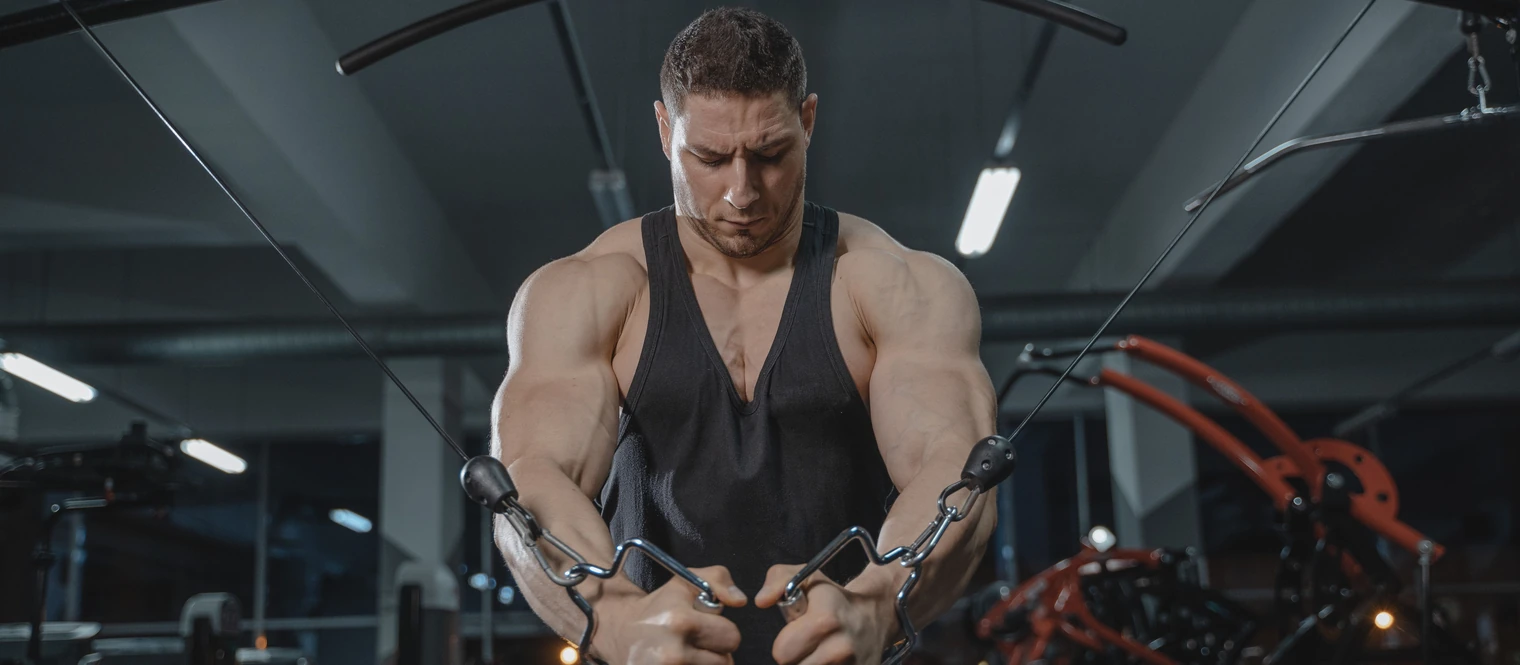
The chest fly gets one of two jobs in most programs. Either it is the pump at the end that nobody takes seriously, or it is treated as a chest exercise in its own right that can stand in for a press. Neither is quite fair. A fly is a good way to add chest work to a program, and a poor replacement for the pressing that does most of it.
A fly adds to a press
When trained lifters did a barbell bench press and a dumbbell fly at the heaviest weight each allowed for six reps, the bench press worked the chest, the front of the shoulders and the triceps harder across most of the movement1. The researchers' advice was to keep both in a program and give the bench press the priority1. That was a small study of men, measuring muscle activity rather than growth, so it is a reason to rank the two and not a verdict on the fly.
It also settles where the fly goes. A review of exercise order found that whatever comes first in a session gets more reps and more work done, and that doing a pec deck fly first to tire the chest before the bench press may not get any more chest into the press2. So press first, while you are fresh, and fly after.
Press first. Fly second. Do the fly well.
Where each one is hardest
Every fly is the same movement: your arms sweep around your shoulders in an arc, with the elbows fixed in a soft bend. What changes is where the resistance comes from, and that decides which part of the arc is hard.
A dumbbell is pulled straight down by gravity. With your arms out wide, the weight is far from your shoulders and the fly is at its hardest. As your hands come together over your chest, the weight sits almost directly above your shoulders and the work all but disappears. A cable pulls along its own line instead, toward the pulley, so it is still pulling as your hands meet. A machine guides your arms along a fixed path, which takes balance out of the job.
Which of those builds the most chest has not been settled. The American College of Sports Medicine's 2026 position stand found that the type of equipment did not consistently change training outcomes, and that there is too little data to say whether machines or free weights build more muscle3. So pick the one that suits your gym and your shoulders, and do it well.
The variations
- Dumbbell fly. A bench and a pair of dumbbells. Hardest at the stretch with your arms wide, so control the bottom and do not chase a heavy weight there.
- Cable fly. Pulleys at chest height, arms sweeping level until your hands meet in front of your breastbone. The cable keeps working right to the end.
- Cable crossover. Pulleys set high, hands sweeping down and in until they cross in front of your lower chest. The same idea as a cable fly on a downward line.
- Low-to-high cable fly. Pulleys set low, hands sweeping up to meet in front of your chin. The same idea again, on an upward line.
- Single-arm high-to-low cable fly. One arm at a time from a high pulley, sweeping down and across your body. Useful when the gym has one free pulley, or when one side lags.
- Machine pec fly. The pec deck. A seat, two handles and a fixed path. Reckoner rates it the easiest of the group to learn, which makes it a good first fly.
The dumbbell squeeze press often turns up in lists like this one and does not belong. Your elbows bend and straighten as you press the bells up together, so it is a press, and Reckoner files it with the flat presses for that reason.
How to do any of them well
- Set the elbows and leave them. A soft bend at the start, the same bend at the end. If your elbows straighten as your hands come together, your triceps have joined in and the fly has become a press.
- Move from the shoulders. Think of hugging a wide tree. Your hands travel in an arc, never straight out and back.
- Own the stretch. Open only as far as you can control, and take the way back as seriously as the way in.
- Count it as chest work. Muscle growth is helped by ten or more sets per muscle group each week3, and your fly sets count toward your chest along with your presses. How many sets per muscle each week has the rest.
Fixed elbows, wide arc, slow on the way back.
What Reckoner does with a fly
A fly is an accessory in Reckoner rather than the lift a day is built around, so it sits behind your pressing. The dumbbell fly, the cable fly, the cable crossover and the pec deck can each be written into your plan. The low-to-high fly and the single-arm fly only appear if you choose them, in the movement picker or when you swap a lift. If you tell Reckoner your shoulder hurts, it leaves flyes out of the plan it writes for you, and training around pain covers the rest.
Progress works the way it does on every lift: the reps climb to the top of your range, then the weight goes up by the smallest step your gym can make, one step on the stack or the next pair of dumbbells. How Reckoner decides to add weight explains why it goes in that order.