 reckoner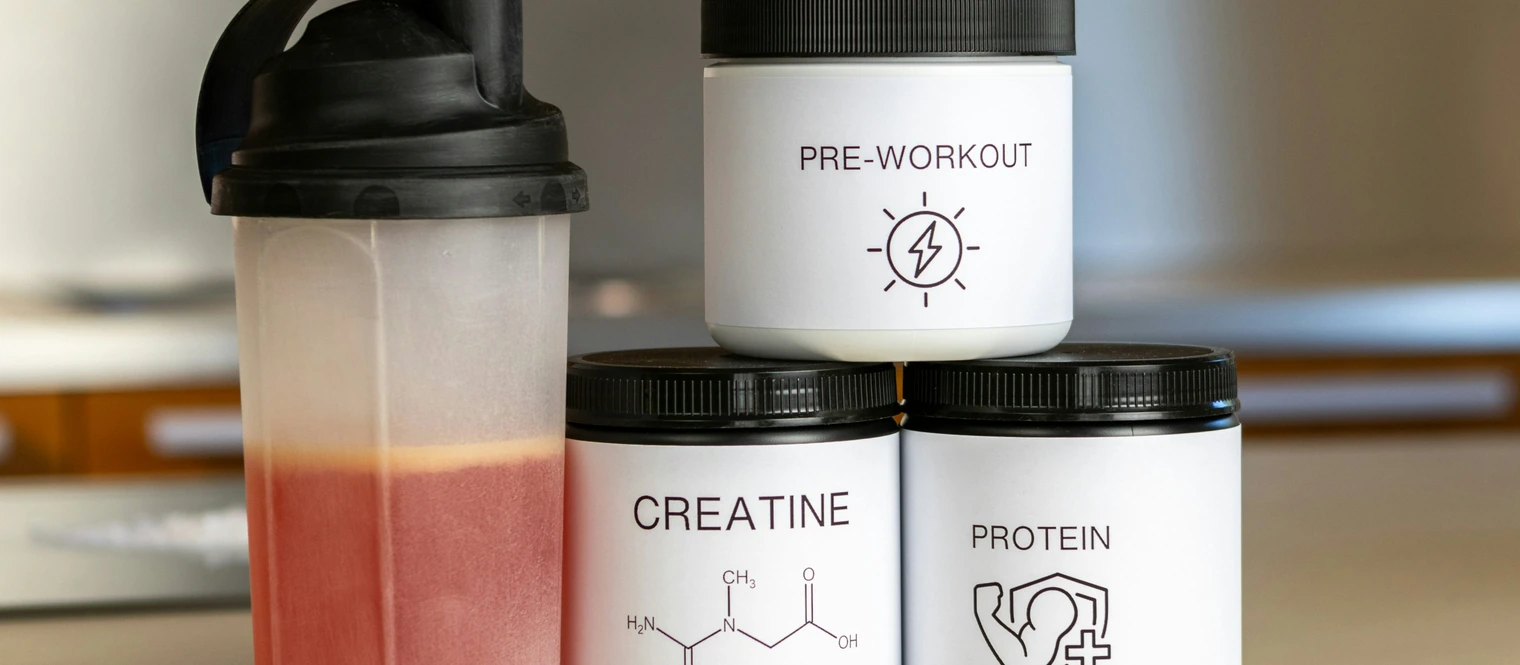
Pre-workout is the one category in this aisle where the question is not really whether the ingredients work. Several of them do. The question is whether the ones in your tub are there in amounts that could possibly do anything, and for most tubs the answer is written on the label in a way you are not meant to read closely.
What is actually in the scoop
Somebody analyzed the hundred best selling pre-workout products and counted. The average product carried 18.4 ingredients, and 44.3 per cent of all ingredients were inside a proprietary blend, which means the label names them and does not say how much of each you are getting3.
That is the whole difficulty in one sentence. A blend is a list of things you have bought in unknown quantities, ordered by weight, and the order tells you almost nothing: a blend can be nine tenths the first ingredient and a dusting of the other seven.
The one that works
Caffeine is in 254 mg of caffeine on average, present in most products3, and it is the ingredient with the best case behind it. The position stand from the International Society of Sports Nutrition puts small to moderate benefits on muscular endurance, movement velocity and muscular strength, and reports performance improvements consistently at three to six milligrams per kilo of bodyweight1.
Run that against your own weight rather than the tub's serving suggestion. At eighty kilos, three to six milligrams per kilo is 240 to 480 milligrams, so an average scoop lands at the bottom of the range and does something. At sixty kilos the same scoop is already past the middle of it.
Two more things the position stand settles. The usual timing is 60 minutes before training1. And the reason your friend swears by it while it does nothing for you is partly genetic: differences in response, and in adverse effects on sleep and anxiety, are attributed to genetic variation in how people metabolize caffeine1.
You are mostly buying caffeine, at a considerable markup, mixed with things the scoop is too small to dose properly.
The one that works for something you are not doing
Beta alanine is the most common ingredient of the lot3, and it is the clearest example of an ingredient with real evidence pointing somewhere other than your session.
It works by raising muscle carnosine, which buffers acidity, and the position stand is specific about where that helps: efforts lasting one to four minutes2. A meta analysis found improvements in tasks of 60 to 240 seconds and none in tasks under 60 seconds, where acidity is not the thing limiting you2. A set of eight reps takes about half a minute. The position stand also says outright that more research is needed on the effects of beta alanine on strength2.
Then there is the dose. Four to six grams a day for at least two to four weeks is what the evidence rests on2, and it is a daily loading protocol rather than something taken before a session. The average pre-workout carries 2 grams of beta alanine per serving, which the analysis notes falls well below the dose shown to work3. The tingling most people take as proof it is working is paraesthesia, the one reported side effect, and it tells you nothing about whether the dose was enough2.
The arithmetic nobody prints
This is the part worth taking away. The analysis makes the point plainly: a product with an eight gram serving cannot contain both the six gram minimum dose of citrulline and the four gram minimum dose of beta alanine3. There is not room. Ten grams of powder cannot hold effective doses of four things, and every product promising it is either using a much larger scoop or is not doing it.
So read the serving size before the ingredient list. A small scoop with a long list is arithmetically committed to underdosing almost everything on it.
What it costs you
Money, mostly, and the amount is knowable. Caffeine is among the cheapest compounds you can buy, so the premium is being paid for the other seventeen things, most of which are in the tub at doses their own evidence would not recognize.
The second cost is your sleep, and it is easy to underestimate because the effect is invisible from inside. Training in the evening on 300 milligrams is a decision about the night as well as the session, and recovery is the half you cannot see going.
The third is that it becomes a condition of training rather than a tool for it. A scoop before every session is a habit that quietly reclassifies an ordinary day as one where you are not able to train.
What to buy instead, if anything
- Caffeine on its own. If what you want is the caffeine, buy the caffeine. It costs almost nothing, the dose is printed on it, and you can size it to your own bodyweight rather than to a scoop.
- Coffee, which is caffeine you already own. A strong cup is in the right region for most people and needs no aisle at all.
- Beta alanine separately, if you want it. Taken daily, at four to six grams, in divided doses to blunt the tingling2. It will do very little for a set of eight, and that is the honest expectation to hold.
- A product with no proprietary blend and a large scoop. If you want a mixed product anyway, those two things are what separate one that could work from one that cannot.
What Reckoner does with it
Nothing, and there is a specific reason worth stating rather than a shrug. The engine reads what you lifted and how hard it felt, so a stimulant reaches it only through those numbers: a session that goes better on caffeine is logged as a session that went better, and the next week is written from it.
That is fine while you take it and it is worth understanding when you stop. If you train every session on 300 milligrams and then run out, the plan in front of you was built from weeks that had it. Nothing breaks. You report the effort honestly, the week comes back harder than it was asked to be, and the engine responds the way it responds to any hard week, which is to give the lift more rest before it takes anything off the bar.
Caffeine works. Buy it as caffeine, take it before the sessions that need it rather than all of them, and spend the difference on food. The scoop was never the thing standing between you and the set.