 reckoner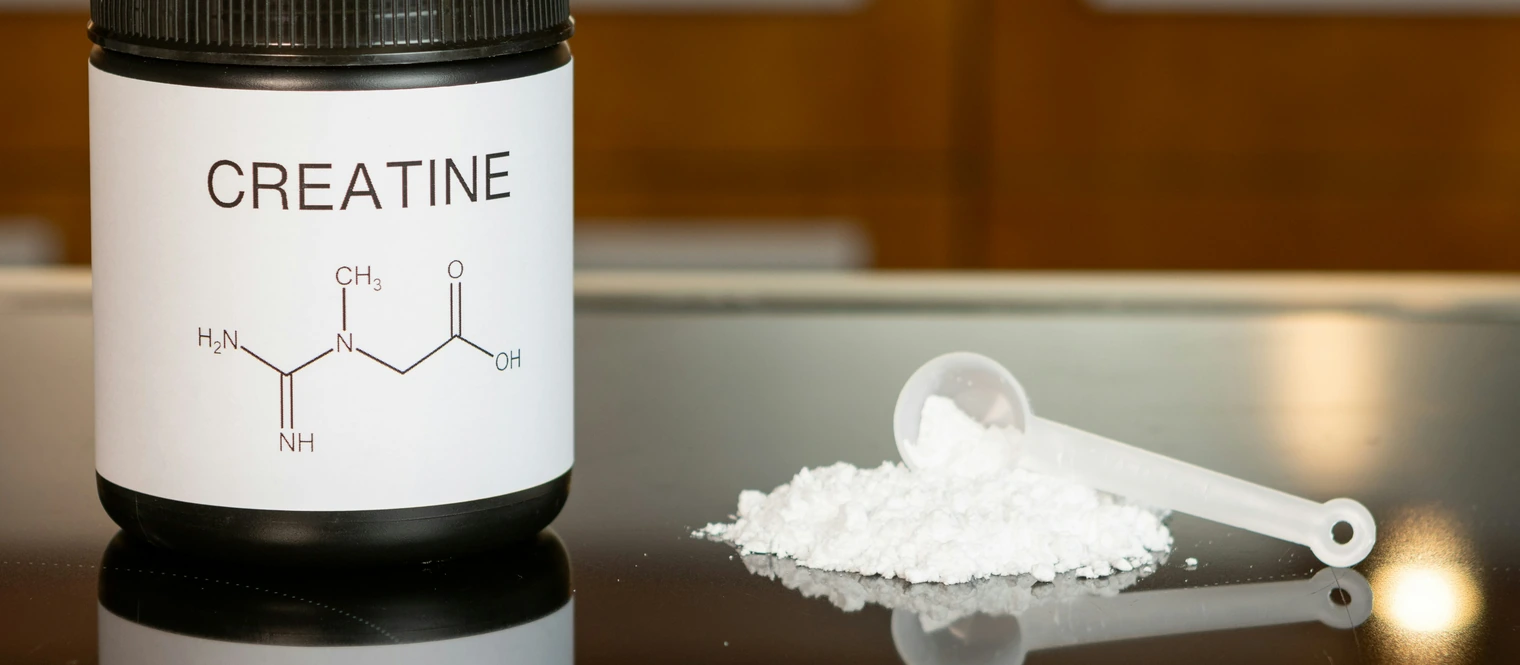
Creatine sits in an odd position. It is the most researched supplement in sport and the one carrying the most folklore, and both of those facts have the same cause. It has been sold to lifters for thirty years, which is long enough for the evidence and the mythology to grow to about the same size.
So split the question in two. What does it do, and what does it cost you. Neither answer is dramatic, and that is most of what is worth knowing.
What it does, which is smaller than the marketing
Creatine is stored in muscle and spent rebuilding ATP during short, hard efforts1. More of it in store means a little more work available before a set falls apart. That is the whole mechanism, and it explains the shape of the benefit. It turns up in repeated hard sets. It does not turn up in one maximal attempt, or in anything lasting several minutes.
The position stand from the International Society of Sports Nutrition puts the improvement in high intensity and repetitive exercise at ten to twenty per cent1. Read that for what it is. It is a change in how much work you get done in a session, not a change in what you can do on a single rep.
What the training studies found
The more useful question is what happens across weeks of real training. A 2024 review pooled 23 trials covering 509 people under fifty, all of them lifting, half supplementing and half on a placebo3.
Upper body strength came out 4.43 kg ahead of placebo. Lower body came out 11.35 kg ahead3.
Both are real and neither is transformative. Set the lower body figure beside what a newer lifter adds to a squat over the same weeks with no supplement at all, and creatine reads as a useful edge on top of training rather than a substitute for any part of it.
Creatine is a good supplement, which is a far smaller claim than the shelf it sits on is making.
What it costs you
The one side effect reported consistently across the literature is weight gain1. Creatine draws water into the muscle cell, so the first thing that moves is the scale, usually inside the first week or two.
That matters more than it sounds if you weigh yourself, because the gain is neither fat nor muscle and it arrives fast enough to be mistaken for both. Whether creatine changes total body water over longer periods is less settled, and the evidence points both ways2.
The second cost is not printed on the tub. Supplements are not approved before they reach the market, and mislabeled and contaminated products are not uncommon5. Monohydrate is cheap enough that there is little to gain by adulterating it, and that is a reason to relax rather than a test result. A product carrying a third party certification is the only version of this you can actually check5.
The third is that what you get out of it depends on what you already have. Creatine comes from meat and fish, so somebody eating plenty of both starts closer to full. Vegetarians have been reported to carry lower muscle stores, and may see the larger gains for that reason1. Nobody can tell you in advance which end of that you are at.
The three fears, and what the evidence says
Kidneys. There is no compelling evidence that creatine harms renal function in healthy people at recommended doses1. One thing genuinely does cause confusion here. Creatine raises blood creatinine, which is the marker used to estimate kidney function, so a routine blood test can read badly with nothing wrong. If you already have kidney disease, that is a conversation with a doctor rather than a paragraph on a website1.
Hair loss. This traces to one 2009 study of rugby players that reported a rise in DHT. It has not been replicated, and the body of evidence does not indicate that creatine raises testosterone, free testosterone or DHT, or causes hair loss2.
Cramping and dehydration. Experimental and clinical research does not support the idea that creatine causes either2. The position stand notes the opposite finding, that users reported cramping less often rather than more1.
How to take it, if you take it
- Monohydrate, and nothing else. Claims that other forms are degraded less or absorbed better are unfounded, and none has been shown to beat monohydrate for getting creatine into muscle1. It is also the cheapest, which is a rare and pleasant alignment.
- Three to five grams a day. You do not have to load. Lower daily doses fill muscle stores perfectly well, they take longer to do it2.
- Load only if you are in a hurry. Around 0.3 grams per kilo of bodyweight a day for five to seven days saturates faster, then drop back to three to five1.
- Stop thinking about timing. When you take it is not critical. Taking it every day is the part that matters4.
Where the evidence is thinner than it looks
That 2024 review is worth reading twice, because of who was in it. Of the 509 people it pooled, 460 were men3. The strength case for creatine is built mostly on men, and the authors say the benefits are likely to be larger in men than in women on the current evidence3.
That is not a reason for a woman to skip it. It is a reason to know that the confident number you were quoted was measured on somebody else.
What Reckoner does with it
Nothing directly. There is no field for a supplement, and the engine has no opinion about what is in your kitchen. Two things are still worth knowing, because creatine moves numbers Reckoner does read.
The first is your bodyweight, which reaches two places. It calibrates your opening loads, because strength standards are relative and a bench press means one thing at sixty kilos and another at ninety. It also sets your fuel targets, which are anchored per kilo. So the water weight creatine adds in the first two weeks will move your protein and calorie numbers, and none of it is muscle. Let it settle before you correct your weigh-in.
The second is that none of it reaches your progression. What lifts you and what loads you is your logged training: the sets you finished, the reps you got, the effort you reported. So the extra reps creatine buys you are read exactly as they should be, which is as reps you did. The bar goes up because you finished the work, and the engine does not need to know why you finished it.
A supplement that adds a few per cent to a session you were going to have anyway is worth about a few per cent. Buy it or do not. Neither decision is the one that settles your next block.
The weigh-in itself, and what else a tape measure can and cannot tell you, is in How to take body measurements that tell you something.