 reckoner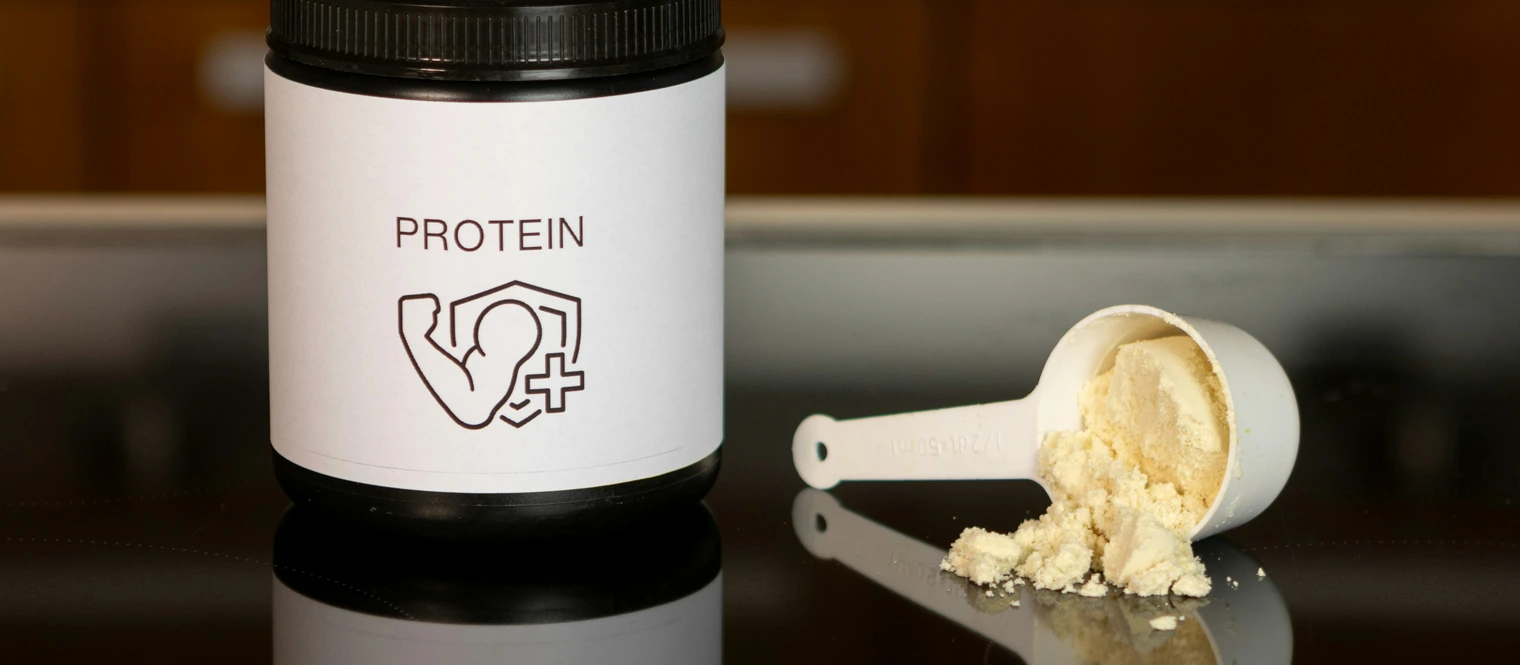
Protein powder occupies a whole aisle and most of the marketing budget in this industry, which makes it easy to forget what is in the tub. It is dried food. Usually milk, sometimes peas or rice, filtered and spray dried and flavored. Nothing in it is unavailable at a butcher.
That is not an argument against it. It is the frame the whole question has to be asked inside, because the useful version is never "does protein build muscle". It is whether a scoop does anything your dinner was not already doing.
What the evidence actually measures
The largest pooled analysis of protein supplementation and lifting gathered 49 controlled trials covering 1863 people, and found that protein supplements do add to the muscle you build from training2.
Then it found the ceiling. Daily intakes above roughly 1.6 grams per kilo of bodyweight a day did not add anything further to lean mass2. The position stand from the International Society of Sports Nutrition puts the useful range at 1.4 to 2.0 grams per kilo of bodyweight a day for most people who train1.
Read what that ceiling is measuring. It is a ceiling on your TOTAL for the day, from every source. It is not a ceiling on powder, and the studies were not comparing powder against food. They were comparing more protein against less.
Nothing in the research says a scoop beats a chicken breast. It says people who ate more protein built more muscle, and a scoop is a convenient way to eat more protein.
What it is genuinely good at
The position stand is unusually direct about this, and worth quoting closely. It is possible for active people to get their protein from whole foods, and supplementation is a practical way of ensuring adequate protein quality and quantity while keeping calories down, particularly for athletes training at high volumes1. In the same document it also tells athletes to focus on whole food sources1.
Both are true and the tension between them is the honest answer. Powder wins on four practical grounds and no physiological one.
- Calories. A scoop gets you 20 to 30 grams of protein for very little else. Doing the same with cheese or mince brings fat along with it, which is fine when you are eating to grow and expensive when you are not.
- Speed. Thirty seconds and one container. Nothing you cook competes with that on a day where the alternative is missing the target.
- Cost per gram. Whey is usually cheaper per gram of protein than fish or good meat, and that is not a small consideration.
- Appetite. On a deficit, food is the thing you have too little room for. On a surplus, it is the thing you cannot face any more of. A drink is easier than a meal at both ends.
What it costs you
The first cost is a habit of mind rather than money. A tub on the counter feels like the protein problem is solved, which is a comfortable thing to believe while eating one scoop a day and missing the target by fifty grams. The number that matters is the daily total, and a scoop is a rounding error against a diet that is not built for it.
The second is what the scoop displaces. A whole food carries the protein plus everything else it evolved with, and powder carries the protein. Substituting occasionally costs nothing. Substituting habitually is a narrower diet chosen for convenience, and it is worth choosing on purpose rather than by drift.
The third is the same one every tub on that shelf has. Supplements are not approved before they reach the market, and mislabeled and contaminated products are not uncommon4. Protein powder is a particularly attractive target, because protein content is measured by nitrogen and nitrogen can be added far more cheaply than protein can. A third party certification is the only version of this a shopper can check4.
Whey, plant, or neither
Whey does have a real edge on acutely stimulating muscle protein synthesis compared with soy and with casein1. Soy is a complete protein but carries less of the branched chain amino acids than milk does1.
Read the size of that carefully before paying for it. It is a difference in the response to one dose, measured in a lab, and it is not the same claim as a difference in the muscle you build over months. If you avoid dairy, take a plant protein and eat a little more of it. If you do not, whey is cheaper and the evidence behind it is deeper.
Timing, which you can stop thinking about
The window closed some time ago. A meta analysis of 23 studies covering 525 people found that once total daily protein was accounted for, the advantage of timing protein around the session disappeared3. Total intake was the strongest predictor of growth and timing mattered considerably less3.
The position stand puts the practical version well: the anabolic effect of a session lasts at least 24 hours1. So a shake in the changing room is a fine habit because it is a habit, not because the clock was running.
Spreading protein across the day in doses of about 0.25 grams per kilo of bodyweight, or 20 to 40 grams, every three to four hours is the pattern the position stand recommends1. That is a reason to have a shake at breakfast if breakfast is where your day goes wrong.
What Reckoner does with it
Reckoner computes a protein target for you and does not care where you get it. The target comes from your bodyweight, your goal and how often you are training that week, which is the input most calculators guess at and Reckoner reads off your actual plan. Your Fuel screen carries the number.
One thing about that number is worth knowing, because it is the most common way to get this wrong. Reckoner's per kilo figure is per kilo of TOTAL bodyweight. Some of the research this area rests on states its recommendation per kilo of fat free mass instead, and the two produce numbers that look alike and are not. A figure lifted from a paper and applied to your scale weight will overshoot, and it will overshoot most in the leanest people reading it. Use the number on your own screen, which is already in the right denominator.
What Reckoner will not do is watch you drink it. There is no food log, no scanning and no scoring, and the protein target does not reach your program: nothing about your sets, reps or loads moves because you hit or missed it. It is a target to aim at, drawn beside the training it is there to support.
Buy the tub if hitting your number is the thing you keep failing at. Do not buy it expecting the tub to be the reason it works. You are the reason, and the tub is a shortcut through the part of the day where you usually give up.