 reckoner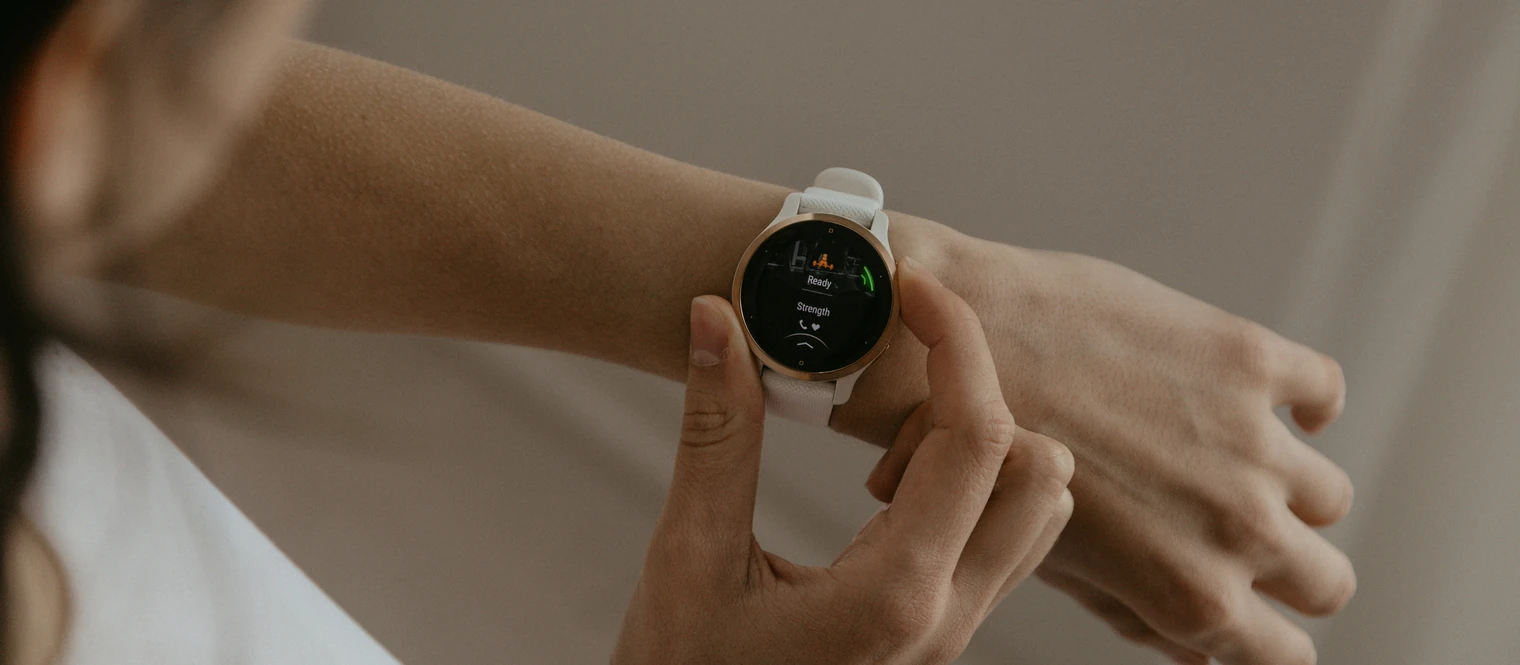
You own a watch that can already record a strength session. Open the built in strength activity and it counts your reps from your wrist, shows the count once you have done at least four of them, and lets you correct that number and add the weight when the set is over. If you want an actual workout on the watch rather than a blank recorder, you build one in Garmin Connect and send it across.1
All of that is worth having. None of it is the hard part.
Your watch already records. It does not decide
Recording is bookkeeping. It tells you what happened. The question you are left holding at the end of a session is a different one, and nothing on the wrist answers it: given what just happened, what goes on the bar next Tuesday.
You built the workout, so you own every number in it. If the bench felt light for three weeks, the watch will record three light weeks perfectly and say nothing. If it felt heavy and you missed reps, it records that too. The next session is whatever you decide it is, and most people decide by repeating what they wrote down in January.
Recording is bookkeeping. Deciding is the coaching.
The decision has a name, and it is older than any watch
Changing your training from what you actually did, rather than from what you planned to do months ago, is called autoregulation. It is a defined framework rather than gym folklore. The clearest statement of it describes adjusting your training variables from an assessment of your own performance, and making that adjustment at the point where your actual performance diverges from the expected one, with three things sitting behind the difference: fitness, fatigue, and readiness from everything outside the gym.2
Read that list again and notice how much of it a watch is already holding while you train. It knows what you lifted, set by set. It knows how hard the last one felt, if something asks you and you answer. It knows the night you slept badly. What no watch does on its own is put those together and change the weight.
The plan you are really comparing against
The honest comparison is not between a good coach and a piece of software. It is between a decision made every week and a decision made once.
A program written in advance is a set of predictions about a version of you that has not trained yet. It cannot know that your third week was a bad one, or that the row moved twice as fast as the press, or that you were ill in February. Those are the moments where a plan and a lifter come apart, and they arrive whether or not anybody is watching for them.
Most lifters do adjust, eventually. They notice a lift has been stuck for a month, take a guess, and take another guess three weeks later. That is autoregulation done from memory, at whatever interval the noticing happens to take. The gap Reckoner fills is the interval, not the arithmetic.
It is worth being plain about what that does and does not buy you. It will not make a badly chosen exercise the right one, and it cannot train for you. What it removes is the month you spend not noticing, and the second month you spend deciding whether last month counted.
What has to be true for any of it to work
All of this rests on the record being honest, which is the one thing a watch is genuinely better at than you are. A set logged three hours later in a phone app is a set you are remembering. A set logged as you rack the bar is a set.
So the load, the reps and the effort go in at the moment they happen, on the thing already on your arm, and the decision is made from that rather than from a recollection. Reckoner asks how you are before it loads the first bar, takes the effort rating as one whole number from six to ten, asks after each lift how the form was, and records the session as a strength training activity in Garmin Connect with every set as a real lap carrying its reps and its weight. The record you can read afterward and the record the plan is written from are the same record.
What the wrist is genuinely for
Not the math. A phone can do the math, and so can a spreadsheet if you keep one honestly for long enough.
What the wrist is for is the two ends: the plan arriving where you are standing, and the record being made at the moment it is true. Open the app and the watch fetches the day through your phone, so it is on the screen before you press anything else, with the lift, the load, the reps and the rest already on it. There is nothing to set up and nothing to type in. Your phone can stay in your bag, and with no signal the watch keeps the last plan it fetched, because a squat rack in a basement is exactly where a connection is not.
Keep using the built in activity for anything Reckoner does not prescribe. It is a good recorder and this is not a replacement for it. It is the half that was missing.
If you want to see the deciding rather than read about it, the guide on how the weight goes up walks six weeks of one bench press through the engine and prints the reason beside every week, including the weeks where the answer was to leave the bar exactly where it was.