 reckoner
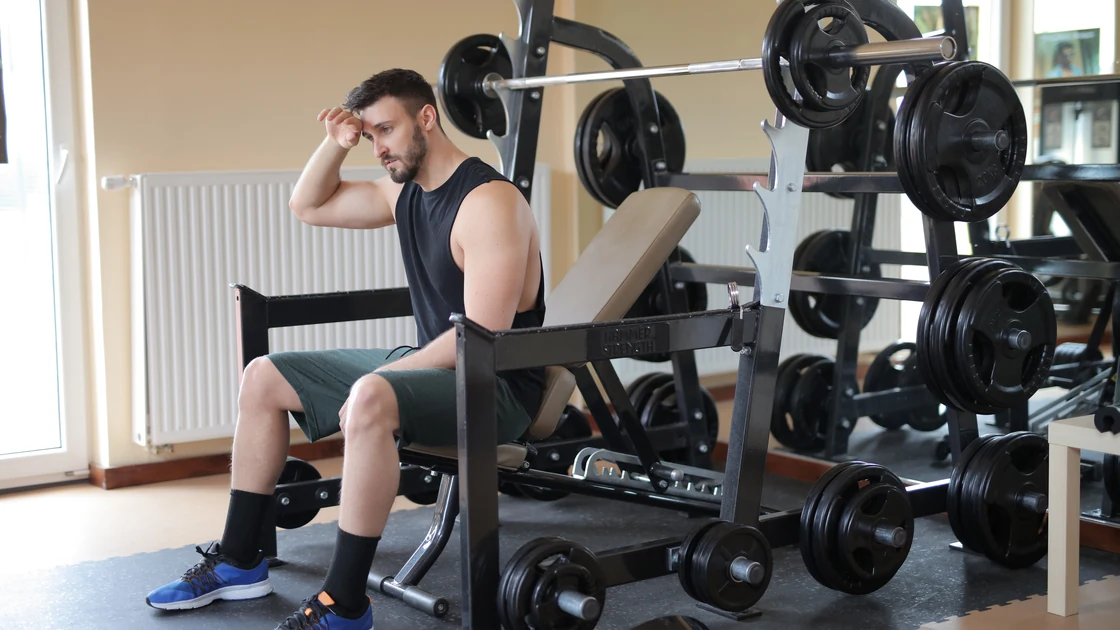
You slept five hours, the alarm went anyway, and the session is on the plan. The question is whether to go, and if you go, whether to train as written. For most people on most bad nights the answer is to go, take a little weight off the heavy lifts, and leave records for another day.
What one short night costs
Less than it feels like, and not evenly. A meta-analysis of 69 studies found that sleeping six hours or less lowered exercise performance by a little under eight per cent on average, with effects in every kind of exercise it looked at, strength included1. Two details from that review matter for when you lift. Sessions in the morning were largely unaffected, while sessions later in the day were consistently worse, and performance slipped by roughly 0.4 per cent for every hour spent awake before the session1.
The heaviest lifts take most of the hit. A systematic review focused on lifting found that a single night with no sleep at all did little to muscle strength, while several nights of short sleep in a row reduced force on multi-joint lifts such as the squat and the deadlift but not on single-joint ones such as a curl2. An older and smaller study showed the same pattern: three nights of three hours' sleep cut maximal bench press, leg press and deadlift performance and left the maximal biceps curl alone3.
Recovery takes a hit too. In a randomized crossover study, one night without sleep lowered muscle protein synthesis the next day by 18 per cent, raised cortisol and lowered testosterone4. That was a full night lost rather than a short one, and the authors describe chronic sleep loss, night after night, as the real threat to muscle4. One bad night is not where the damage is. A run of them is.
Train on a bad night. Take a little weight off, keep the reps clean, and save the record for a rested day.
What to do on the day
- Go, if you can. Turning up keeps the habit and the practice of the movements, and a lighter session still trains them. A short night is a reason to ease the session, not a reason to lose it.
- Take some weight off the big lifts. The compound lifts are where short sleep shows2, so they are where to ease off. Smaller exercises can usually stay as written.
- Keep the reps clean and stop sooner. If the bar slows early or the form slips on a rep that normally comes easily, end the set. A tired day is the wrong day to grind.
- Train earlier if you have the choice. The morning sessions in the sleep review held up best, and every extra hour awake cost a little more1.
- Caffeine can help, if it suits you. A sports nutrition position stand concluded that caffeine may improve physical and mental performance in some people when sleep deprived5. Mind the timing, because caffeine late in the day can cost you the next night's sleep as well5.
- Skip the test. A new best single on five hours' sleep is a bet against the odds, and a missed attempt teaches you nothing about your strength.
How Reckoner handles it
Before your first set Reckoner asks how you are. Answer Rough and every weight in today's session comes down about ten per cent, the sets and reps stay the same, and the lighter weights never become your new starting point. The lighter day cannot count toward a stall. What does a rough day change? covers it in full.
If most of your mornings start with Rough, the plan is not the thing to fix. A week of short nights is the version of this that costs real progress, and it is worth looking at before you look at your program.