 reckoner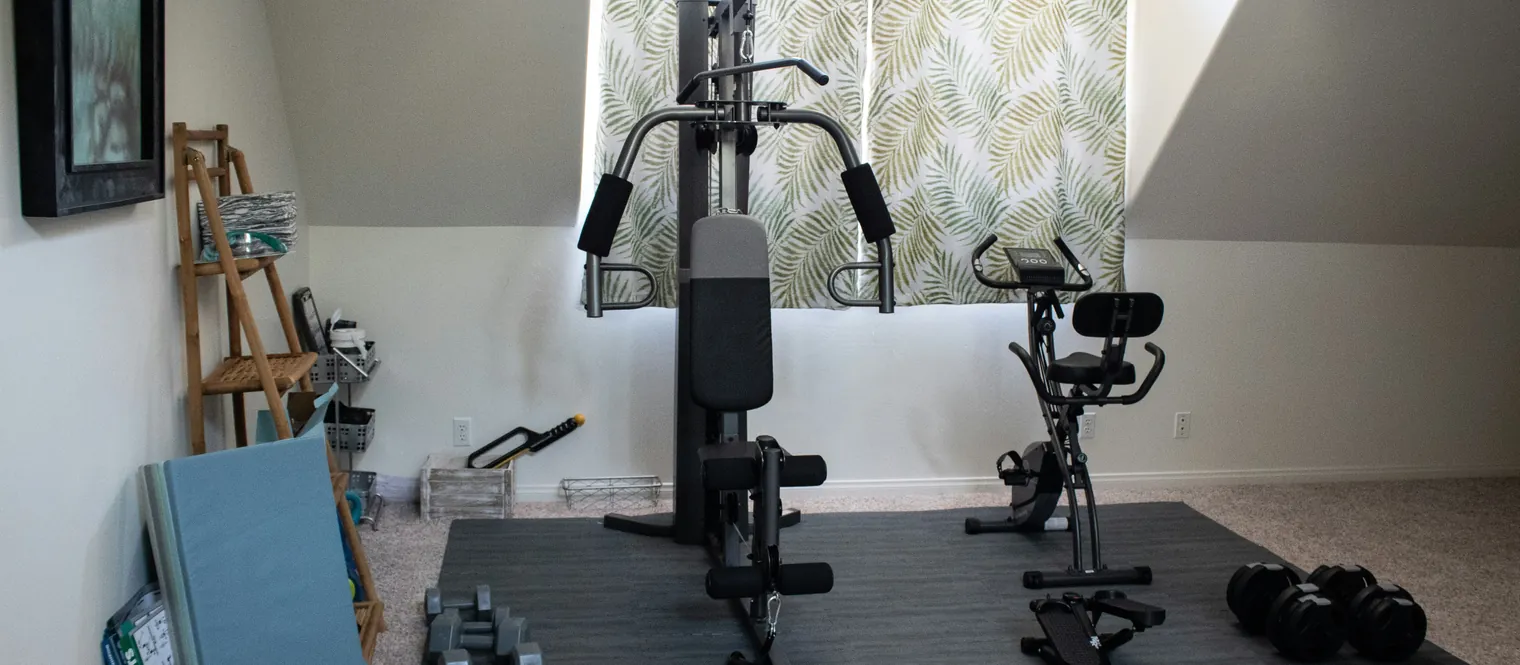
Two questions arrive at the same problem from opposite directions. Somebody with a rack, a bar and a pile of plates in the garage wants a home gym program. Somebody with a pair of adjustable dumbbells and a bench wants a dumbbell only program. Both are usually answered with an exercise list, and the exercise list is the part that matters least.
Your kit decides two things, and neither of them is which movements you are allowed to do.
What limited equipment actually limits
It limits the size of the step you can take, and it limits how far up you can go. Almost everything else is still available. A rack and a bar cover every pattern a commercial gym covers apart from the machines. A pair of dumbbells and a bench cover pressing, rowing, hinging, squatting and every single joint lift there is, in some form.
The evidence on the machines you are missing is unhelpfully reassuring. A meta analysis of 13 studies covering 1016 people found no difference between free weight and machine based training for muscle growth, and no difference for maximal strength in the direct comparison. Free weight training won on free weight tests and machine training won on machine tests, which is a statement about how strength was measured rather than about how much of it there was1. The 2026 position stand from the American College of Sports Medicine lands in the same place, reporting that strength was not affected by machine versus free weight training2.
The smallest jump you own is your progression step
This is the constraint nobody writing home gym programs mentions. The smallest pair of plates in the garage sets the smallest change you can make to a barbell, and that change is exactly the same size on your overhead press as it is on your deadlift. As a share of the lift it is several times bigger on the press, which is why the press is almost always the first thing in a home gym to stop moving.
Adjustable dumbbells have the same problem in a different shape. Whatever their smallest step is, it applies to each hand, and it lands hardest on your smallest lifts for exactly the same reason.
Two things fix it and both are cheap.
- Fractional plates. A pair of small plates that live in the bottom of the rack turn a press that has been stuck for a month into one that moves again, because the step finally fits the lift.
- Climb reps before you climb load. A rep is a smaller increment than any plate you own, which is the whole point of double progression, and it is worth more at home than it is anywhere else.
Dumbbells give you a ceiling, and your legs meet it first
A barbell in a rack does not really have a ceiling: you buy more plates. A pair of dumbbells has one, and it is whatever the heaviest pair in the house weighs. Your press will live comfortably under it for years. Your squat, hinge and lunge will reach it inside a year, because a leg can move far more than two hands can hold on to.
What the ceiling actually costs you
Less than you fear for size, and more than you would like for maximal strength. The two halves have different evidence behind them and they should not be answered together.
For size, load turns out to matter far less than effort. A meta analysis comparing low load with high load training, in which every set was taken to momentary failure, found similar changes in muscle size across the whole loading range and greater one rep max strength only in the heavy groups3. The 2026 position stand puts the same finding more bluntly: hypertrophy was not affected by load anywhere from thirty per cent of a one rep max up to one hundred per cent, while voluntary strength was enhanced by lifting loads at eighty per cent or above2.
So the honest accounting is this. A dumbbell only program can build muscle at much the same rate a barbell program does. It cannot make you as strong at a one rep max, because that number is trained by lifting close to it and you have no way to get close.
Running out of weight is not running out of training. It is running out of one of the ways to make a set harder.
What to do when you run out of dumbbell
- Spend the reps in reserve you were saving. The same position stand puts sufficient effort at around two to three reps in reserve rather than at failure2, and a lifter under a load ceiling has more of that margin to spend than a lifter who can add a plate instead.
- Put more of your body on one limb. A split squat, a single leg Romanian deadlift or a step up asks one leg to move most of your body weight with the same dumbbells you already own. It is the largest single jump available to you and it costs nothing.
- Add range before you add weight. A press from a deeper starting position and a squat that goes further down are both more work with the same load in your hands.
- Slow the lowering. Controlling the descent for three seconds instead of one makes a set that was easy into one that is not, without anything changing in the rack.
- Add sets before you add days. The same stand puts the hypertrophy volume recommendation at ten or more sets a week per muscle group2, and reaching that is a question of sets rather than of load.
What you honestly give up
A one rep max on a barbell lift, and the specific skill of holding a heavy bar in a fixed position, which is trained by holding heavy bars. If your goal is a number in a powerlifting meet, a dumbbell only program will not get you there and nothing in the evidence suggests otherwise. If your goal is to be visibly and usefully stronger with a floor, a bench and two dumbbells, the ceiling is much further away than the internet tells you, and you will meet the limits of your patience long before you meet the limits of the kit.
The gym you actually use twice a week beats the gym you drive to once.
What Reckoner does with it
Reckoner asks what is in the room. There is a home gym preset beside the commercial gym one, and ticking dumbbells brings up one extra question: how heavy the heaviest pair is. It picks movements the kit can express and it holds a dumbbell prescription to the pair you said you own, rather than printing a weight that does not exist in your house.
Then it asks what your gym can make. What the bar weighs, the smallest pair of plates you have, how far your dumbbells step, so that the next load it puts in front of you is one you can actually load. That is the difference between a program written for a gym and a program written for yours.