 reckoner
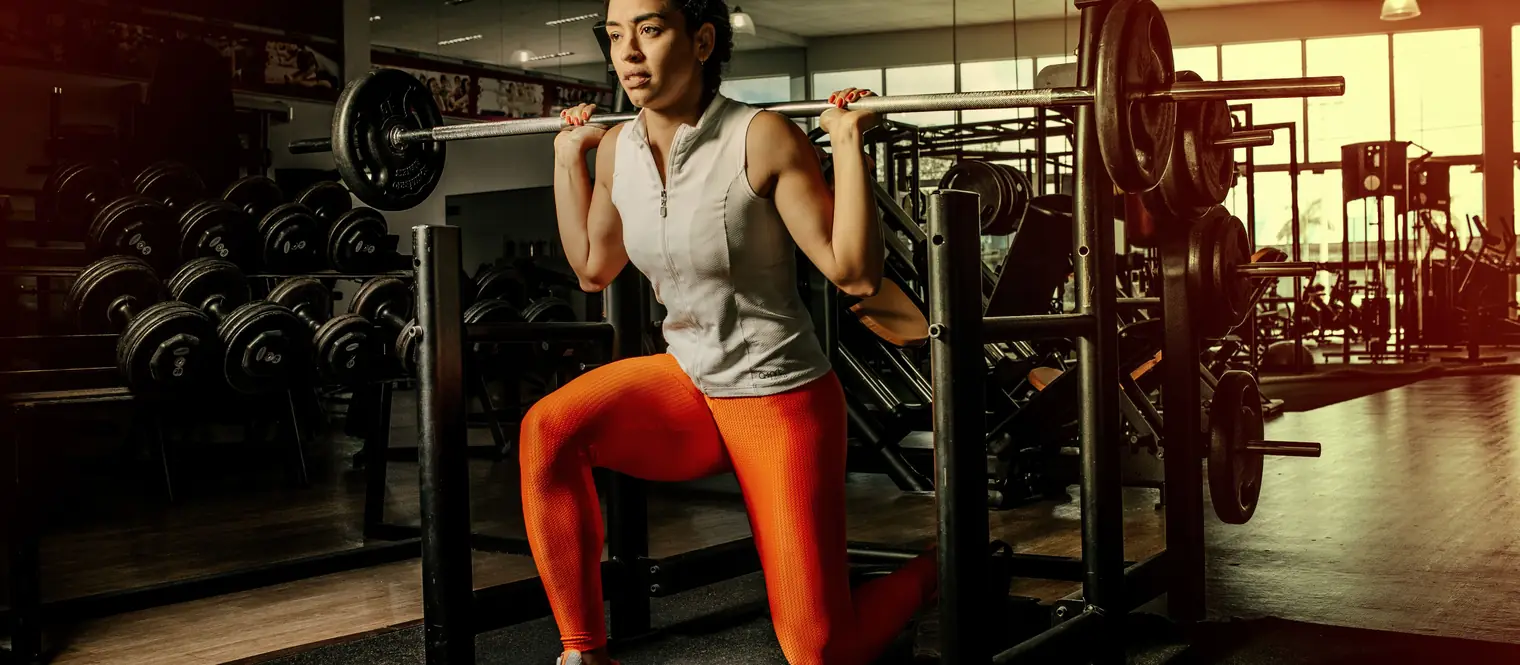
Single-leg work has two reputations and neither is quite right. One says lunges and split squats are balance drills, the thing a physio gives you on the way back from an injury, and that real leg training happens under a barbell on two feet. The other says single-leg training is the more athletic choice, because running, jumping and changing direction all happen on one leg at a time.
The trials comparing the two point somewhere more useful than either. You get better at the version you practice, and for building muscle the two come out about even.
What the trials found
A 2026 review pooled twenty-four randomized trials that trained one group on single-leg lifts and another on two-legged lifts. Single-leg training came out ahead on single-leg strength and on jumping off one leg. Two-legged training came out ahead on two-legged strength, by a small margin. On muscle growth, sprinting and changing direction there was no meaningful difference between them1.
An earlier review of fourteen studies, most of them in young athletes, drew the same picture: one-legged training for one-legged jumping, two-legged training for two-legged strength, and no clear winner on sprinting or changing direction2. A third review, of trials in athletes, found no clear difference between the two whether the single-leg group did the same amount of work as the two-legged group or twice as much4.
One small trial makes the point concrete. Academy rugby players spent five weeks training their legs with either the back squat alone or the rear-foot-elevated split squat alone. Both groups improved their back squat, their split squat, their 40 meter sprint and an agility test, and the two groups did not differ3. It is an older study and a small one, so read it as an illustration rather than a verdict. It is a useful one, because it says a lifter who never put a barbell on their back still got stronger at the back squat.
You get better at the version you practice. The muscle does not much mind which one it was.
So what is single-leg work for
It is for the same thing every other leg lift is for: giving your quads and glutes enough hard sets to grow and get stronger. The evidence says it does that about as well as the two-legged version. What it changes is the situation around the work.
- It needs very little equipment. A pair of dumbbells and a bench covers most of the family, and several versions need nothing at all. That makes it the natural leg lift in a home gym, a hotel gym, or a crowded gym with no free rack.
- Each leg does its own work. On one leg there is no other side to share the load with, so you see each side as it is.
- It trains the version some sports use. If your sport has you jumping off one leg, single-leg training is the version that came out ahead on exactly that in both of the larger reviews above.
None of that makes the squat or the deadlift unnecessary. If your goal is a bigger squat, squatting is the most direct route there, and single-leg work sits beside it as supporting work rather than replacing it.
The family, from easiest to hardest
The single-leg lifts in Reckoner's library are rated for how much coaching they need and how much they cost to recover from, and the ratings put them roughly in this order:
- Bodyweight reverse lunge and shin-height step-up. The place to learn the shape. Stepping back keeps your front foot planted the whole time, so there is less to coordinate.
- Dumbbell reverse lunge, dumbbell split squat and dumbbell step-up. The same movements with weight in your hands. The split squat keeps both feet where they are, so all of your attention goes to going straight down and back up.
- Walking lunge and rear-foot-elevated split squat. The two hardest to coach and the two that cost the most to recover from. With your back foot up on a bench, the front leg does most of the work, which is why it rates as the hardest one in the family.
The single-leg glute bridge and the single-leg Romanian deadlift are single-leg work too, aimed more at the back of the hip than the front of the thigh.
How to fit it into your week
- Pick one, by your kit and your goal. If you have a barbell and want a bigger squat, single-leg work goes after it as supporting work. If dumbbells are what you have, a split squat or a reverse lunge can be the main leg lift of the day.
- Do the same reps on both legs. Finish one leg, then do the other leg's reps at the same weight. If one side cannot match the other, the weaker side decides the number you write down.
- Hold something for balance at first. A hand on a rack or a wall in your first weeks takes balance out of the picture, so your legs can learn the movement and work hard.
- Move up the family when the weights run out. If the heaviest dumbbells in your gym have become easy for reps, the next lift in the list is harder at the same weight.
Pick the one your gym lets you load, and train it hard on both legs.
What Reckoner does with it
Most Reckoner plans put a single-leg lift on a lower body day, usually as supporting work beside the main squat or hinge. A prescribed set of a single-leg lift is both legs, left then right, and it counts as one set for each leg's muscles rather than two, because each leg only did one set's worth of work. The weighted versions progress the way your other dumbbell lifts do. The bodyweight versions have no weight to add, so their reps climb to the top of the range and hold there, and if one sits at the top for a few trained weeks the engine offers you a swap.