 reckoner
Answer Belly fat
Lifting and belly fat: what really helps
Lifting trims some of the deep fat around your middle, often more than the scale shows. Cardio has the stronger evidence for it, and no exercise chooses where the fat comes off.
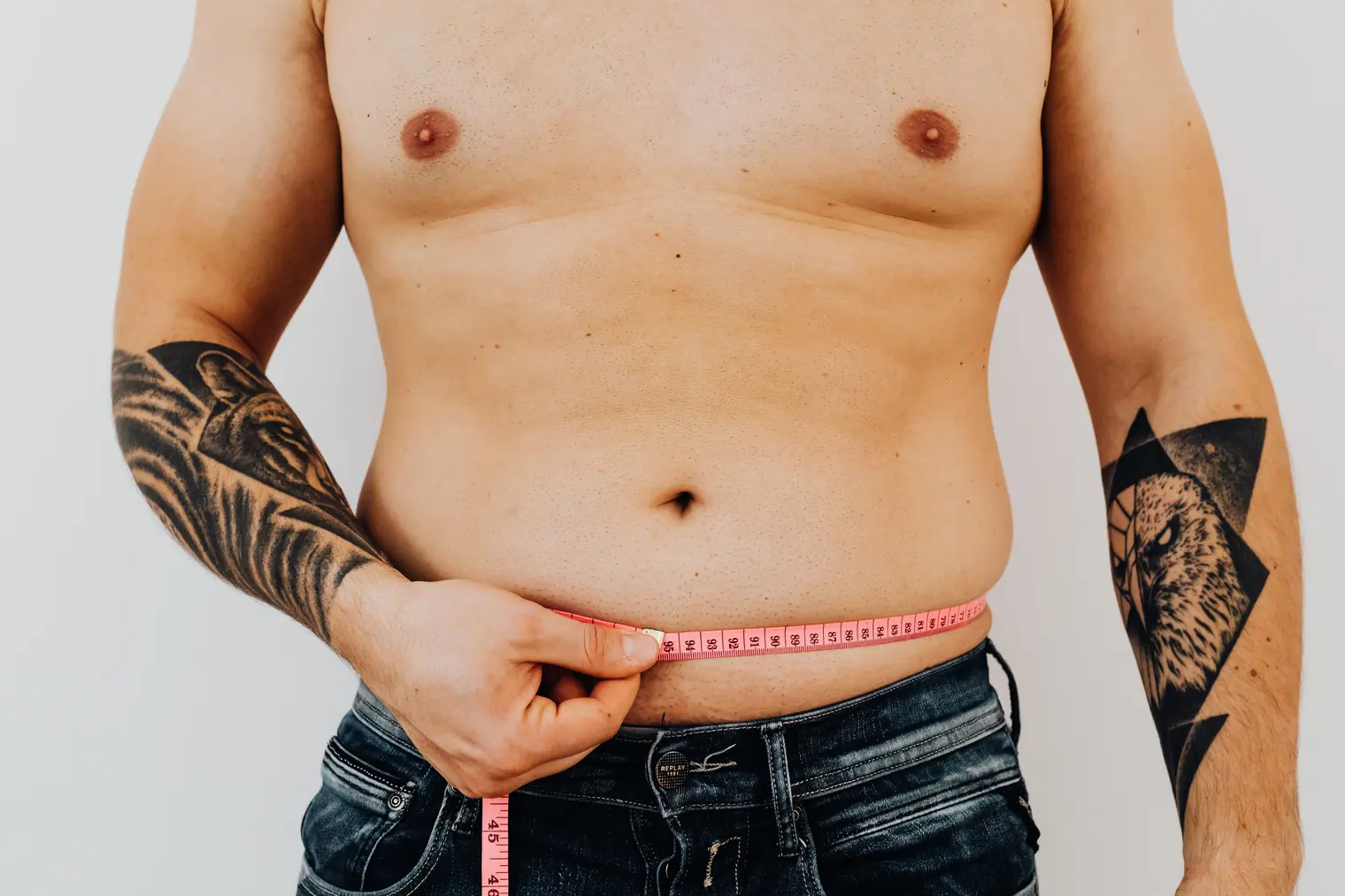
If your belly is the part of you that bothers you, you are in good company. You are also being sold a lot of nonsense about it. There is no belly exercise and no plank challenge that melts it. What works is calmer than the ads, and it works on the whole of you.
Two kinds of belly fat
The fat you can pinch sits under the skin. The fat that matters more for your health sits deeper, packed around your organs, and it is called visceral fat. A large review of exercise and diet trials called visceral fat a stronger predictor of illness and early death than body weight1.
Here is the good news. Exercise moves that deeper fat even when the scale does not. In the same review, people who exercised and lost no weight still lost about six percent of their visceral fat, while dieting without weight loss barely touched it1. So the number on the scale is a poor way to judge whether your training is working on your middle.
What lifting does
A 2022 review pooled 54 trials of healthy adults who lifted for at least four weeks, compared with people who did not exercise. Lifting lowered body fat percentage, total fat mass and visceral fat, and men and women responded alike2. The average drop in body fat was about one and a half percentage points2. That is modest, and it comes on top of the muscle you add, which the scale counts as weight gained.
A 2024 analysis of 84 trials in people carrying extra weight found that lifting reduced visceral fat too. Split by sex, the effect was clear in men and did not show up in women, unlike the 2022 review, so for women that question is still open3.
What cardio does
That 2024 analysis also ranked the options, and lifting came last. Moderate cardio, lifting, the two combined and interval training all reduced visceral fat. Vigorous cardio and interval training ranked as the most likely to do the most, for visceral fat, waist size and total body fat alike3.
So if your belly is the goal, cardio is not the optional extra. It is the part with the strongest evidence. It does not have to be punishing, either: moderate sessions count, and harder ones ranked higher.
Crunches will not choose for you
Spot reduction is the idea that working a muscle burns the fat sitting over it. In one trial, people did seven ab exercises five days a week for six weeks, and their belly fat did not change4. In another, people trained one leg for twelve weeks and lost fat, but from their arms and trunk rather than from the leg they trained5.
One small 2023 trial of sixteen men did find a little more trunk fat lost when part of a running session was swapped for ab work6. It is one study and a small one, and it is not a reason to do hundreds of crunches. Train your abs because a strong trunk is useful under a barbell. Let the fat come off wherever your body decides.
What helps, in order
- Keep lifting. It works on the deep fat and it keeps the muscle you have while you lose the rest.
- Add cardio you will actually do. A couple of sessions a week you look forward to beats a plan you quit in March. If you are wondering where to fit it, cardio before or after lifting has the answer.
- Measure your waist, not only your weight. The NHS suggests keeping your waist to less than half your height7. How to take body measurements shows how to get a number you can trust.
- Eat a little less, without crash dieting. Diet moves the scale faster than exercise does1. A small, steady change you can live with is the one that lasts.
- Judge it in months. These trials ran for weeks and months, not days. Give your own body the same patience.
Lift, add some cardio, and watch the tape measure rather than the scale.