

Answer The menstrual cycle
Should I change my training around my cycle?
Mostly, no. Keep lifting through your whole cycle, and let how you feel on the day decide how hard to push, not a chart on the wall.

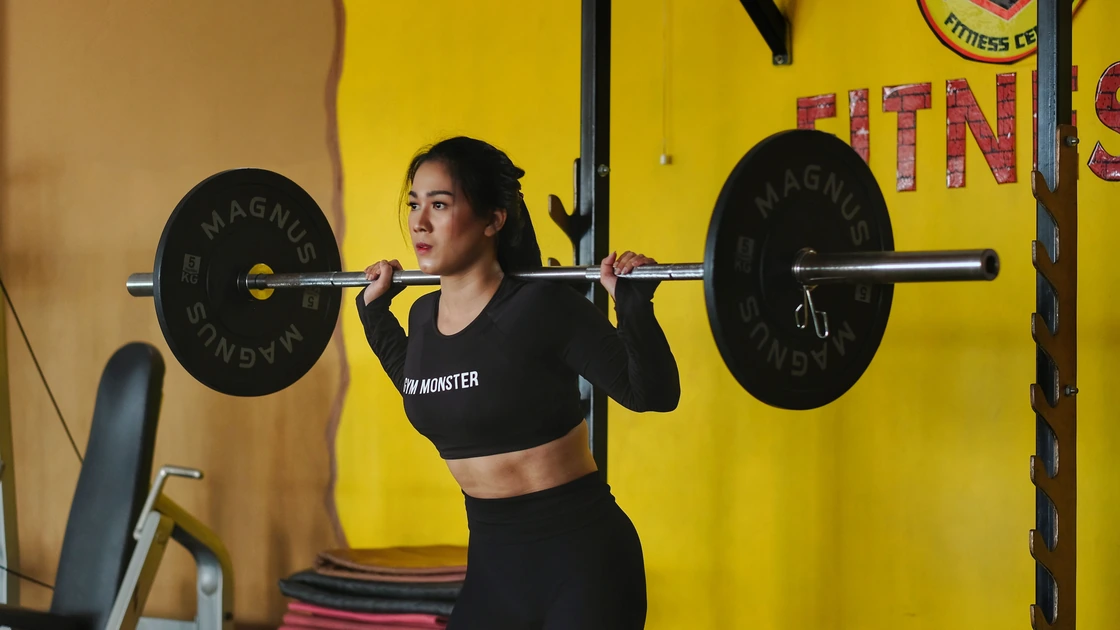
Somewhere on the internet there is a chart. It tells you to lift heavy in the first half of your cycle, ease off in the second half, and plan your whole month around a hormone graph. It looks tidy, and it would be lovely if bodies were tidy. Here is what the research says when you go and look.
Does your cycle change how strong you are?
If it does, not by much. A 2020 meta-analysis went through 78 studies on exercise performance across the menstrual cycle. It found that performance might be a touch lower in the early follicular phase, which is the first few days of your period, and the size of the effect was trivial1. The studies disagreed with each other a lot, and many were not great quality, so the authors did not think general rules could be drawn. What they recommended instead was a personal approach, based on how you respond1.
What about plans built around the phases?
Some researchers have made the case for them. A 2022 review in Sports Medicine argued that lifting in the follicular phase, the stretch from the first day of your period up to ovulation, may be better for strength and muscle than lifting in the luteal phase after it2. That is an argument for the idea, not a test of it, and the authors close with directions for further research2.
A 2023 umbrella review, which is a review of the reviews, went through the evidence on cycle phase, strength and muscle growth. The findings were highly variable, the methods in the studies were often inconsistent, and the authors concluded it is premature to say that short-term hormone changes appreciably affect strength or the gains from lifting3. So a phase based plan is a hypothesis for now. It might turn out to be right for some people. It has not been shown to beat simply training.
On the pill? Same story. A meta-analysis of 42 studies found that women on the pill might perform slightly worse on average than women who were not, though any difference across the group was most likely trivial, and it did not recommend general advice about the pill either way4.
So what do you do?
Train. Keep your plan on the days it says, through every part of your cycle, and let the day decide how hard to push. If a day feels heavier than usual, that is information, and you are allowed to use it.
That is what the How are you? check on Today and on your watch is for. Before your first set it asks Rough, Steady or Primed. Answer Rough and this session's weights come down about ten per cent, next week adds no weight off that day, and nothing about it counts as a stall. Answer Steady and nothing changes. Reckoner does not ask where you are in your cycle. It asks how you feel, which is the thing that matters on the day. What does a rough day change? has the detail.
- Feel good on a period day? Train as planned. The dip researchers found on those days was trivial1.
- Feel flat? Answer Rough and let the session meet you where you are.
- Notice a pattern over a few months? That is yours to use. If you are flat on the same days every cycle, answer Rough on those days. A personal approach is what the researchers recommended1, and your own log is how you build one.
Period pain and training
Period pain is common, and it is real. Exercise can help: a Cochrane review of 12 trials found that regular exercise eased period pain for many women, most often with sessions about three times a week5. On a painful day, answer Rough and the weights come down, or choose a shorter session. You still trained.
Worth getting checked, and worth pushing for
- Pain that stops you doing your usual things, or that is getting worse. The NHS says to see a doctor about it, and about periods that become heavier or irregular, or bleeding between periods6. If you were told it is normal and it still stops your life, ask again. In the UK, people with endometriosis wait 8 years and 10 months for a diagnosis on average7.
- Heavy periods. The same advice if they affect your life, have lasted some time, or come with severe pain8.
- Periods that stop. They have many possible causes, among them pregnancy, stress and sudden weight loss, and the NHS says to see a doctor about them9. This one is ours as coaches too. A common cause in people who train hard is low energy availability: eating too little for the energy you spend. The American College of Sports Medicine names it as the factor that appears to impair reproductive and bone health in female athletes10. If your periods stop while you are training hard or eating less, say so. Do not put it down to training and carry on.
Train through it, listen to the day, and get the odd stuff checked.