 reckoner
Guide Rear delts
Rear delt exercises: reverse flies, face pulls and more
Every good rear delt exercise is the same movement, your arm sweeping out and back with a soft elbow. Pick the version that fits your gym, keep the weight light enough to stay in control, and add reps before weight.
The back of your shoulder is the part you cannot see in the mirror, which is most of the reason it gets forgotten. It is easy to go months without training it directly while the front of the shoulder gets a press every session.
The fix is not complicated. The rear delt has one main job you can train directly, and every exercise on this page is a version of the same movement. What changes between them is the equipment, how much support you get, and how easy they are to learn.
What the rear delt does
Raise your arm out in front of you, then sweep it out to the side and back. That movement is called horizontal abduction, and the reverse fly is a popular exercise for the muscles that do it, the rear delt among them1.
So the test for any rear delt exercise is simple. Is your arm sweeping out and back, with the elbow soft and the shoulder down? If it is, the rear delt is doing the work. If your elbow bends a lot and you start pulling toward your ribs, you have turned it into a row.
The variations, from most support to least
- Machine rear delt fly. Sit facing the pad of a pec deck with the handles behind you, and sweep your arms back. The pad holds your chest, so the machine is the easiest way to learn the movement and to load it in small steps. If the handles give you a choice, one small study of trained men found slightly more rear delt activity with a neutral grip, palms facing each other, than with palms down1. Activity is not the same thing as growth, so use whichever grip feels better on your shoulders.
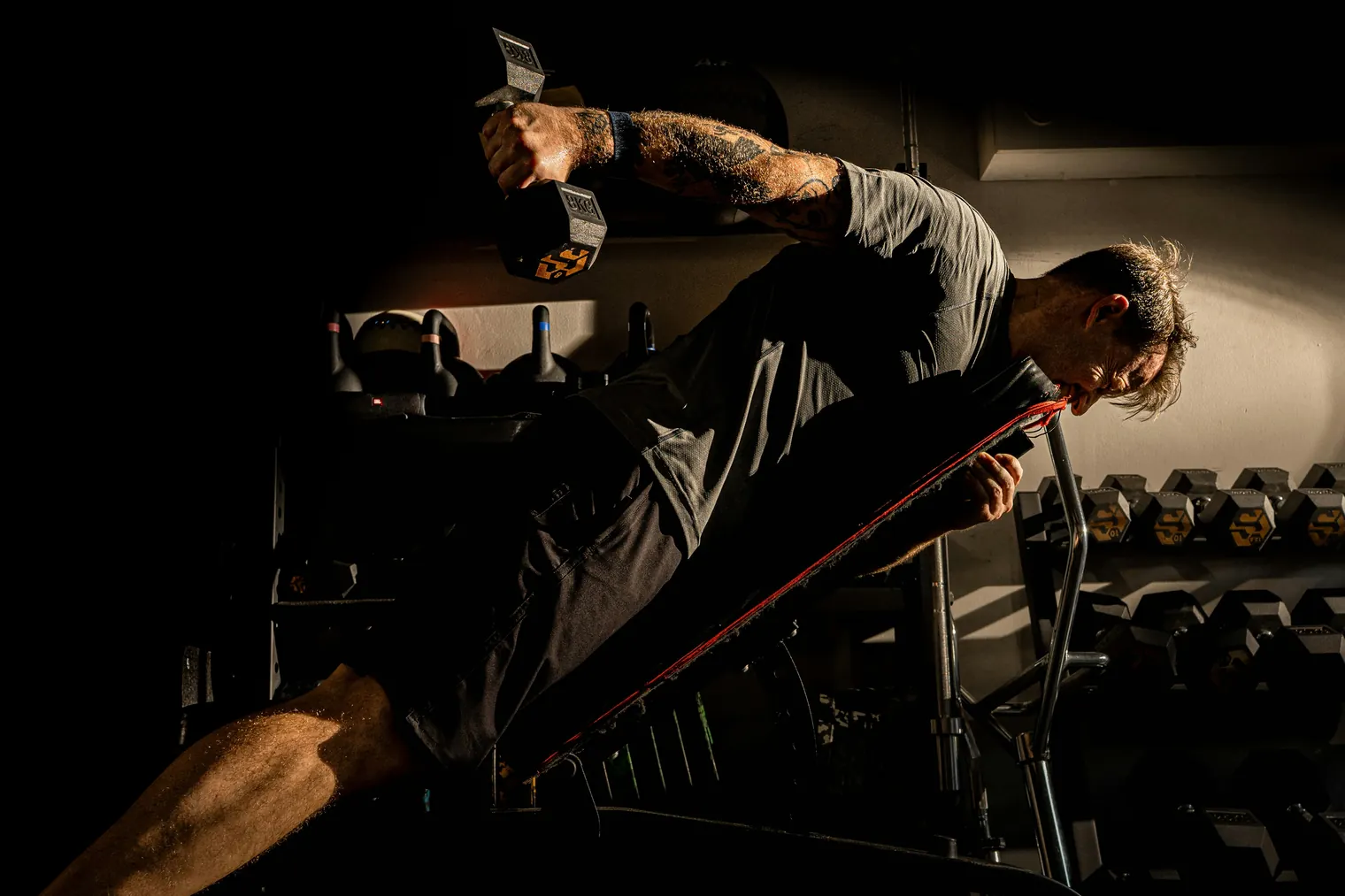
- Incline reverse fly. Lie chest down on an incline bench with a dumbbell in each hand and sweep them out. The bench takes your lower back out of it, which makes it the best dumbbell version for most people.
- Seated reverse dumbbell fly. Sit on the end of a flat bench, lean your chest toward your thighs, and sweep the dumbbells out. Good when there is no incline bench free, and you need to hold the lean yourself.
- Reverse cable crossover. Stand between two cable stacks set around shoulder height, take the left cable in your right hand and the right in your left, and sweep your arms out and back. The cables let you load it in small steps, like the machine.
- Face pull. A rope on a cable set at face height, pulled toward your face with your elbows high and your hands finishing beside your ears. More elbow bend than a fly, and Reckoner's library lists it as a rear delt and upper back exercise, the same as the flies.
- Band pull-apart. A light band held in front of you at shoulder height and stretched apart. The lightest of the six, which makes it a good warm up, and the band pull-apart warm up covers how to use it that way.
If you can feel your traps doing it, the weight is too heavy.
How to do them well
- Soft, fixed elbows. Pick a slight bend at the start and keep it. The elbow angle should not change through the rep.
- Shoulders down. If your shoulders creep up toward your ears, your traps have taken over. Lighten the weight.
- Stop when your arms are in line with your body. That is the end of the movement on every version here.
- Control the way back. Let the weight return slowly rather than letting it swing your arms forward.
- Light is fine. These are small muscles. A weight that looks embarrassingly light and is done well beats a heavy one swung with your whole back.
How to make them harder over time
Rear delt work progresses in small steps, because the muscle is small and a single jump in dumbbell weight can be a big share of the load. So climb the reps first: add reps within your range until you reach the top of it on every set, then go up by the smallest step you have. That is double progression, and it suits these exercises well. The machine and the cables often offer smaller steps than a dumbbell rack, which is another reason they are good places to start.
How many sets they deserve each week is part of the bigger shoulder question, and how many sets per muscle each week covers it.
Where they fit in your week
Rear delt exercises are small and light, so they slot in easily. Most people put them near the end of an upper body or pull session, after the big rows and presses, when they will not steal energy from anything heavier. The band pull-apart is the exception, because it is light enough to use as part of your warm up before pressing. There is no need for a shoulder day to fit them in.
What Reckoner does with them
In Reckoner's library, all six exercises on this page list your rear delts and upper back as the muscles they train first, and your rear delts count toward your shoulders in the weekly volume Reckoner keeps. Log the reps you got and how hard the set felt, and the engine moves you up when you have earned it.
Sweep out and back, keep it light, and climb the reps before the weight.